Choosing the right curtain hooks can feel tricky with so many options available.
Whether you need something sturdy for heavy blackout curtains or something simple for lightweight drapes, the right support makes all the difference.
In this guide, you’ll discover various hook types, their best uses, and how to pick the perfect hardware for your window.
Keep reading to find the best fit for your space.
Curtain Hooks: Pin, S-Hook, or Clip-Which One Should You Use?
Choosing the right curtain hook depends on your fabric type, hardware setup, and the look you want. Pin hooks are ideal for thick, pleated headers because their sharp end embeds securely into the fabric. S-hooks work best with lightweight fabrics that have grommets or eyelets, providing easy attachment. Clip rings attach directly to flat panels and allow for simple height adjustments. For a polished, formal look, pleater tape hooks provide adjustable pleats with precise control. When wiring the track for motorized curtains, ensure you first connect the power supply properly to avoid short circuits. For delicate roller blind fabrics, a gentle dusting with a soft brush can prevent abrasive damage before deep cleaning. If your track uses LED bulbs, poor electrical connections can cause flickering that disrupts smooth operation.
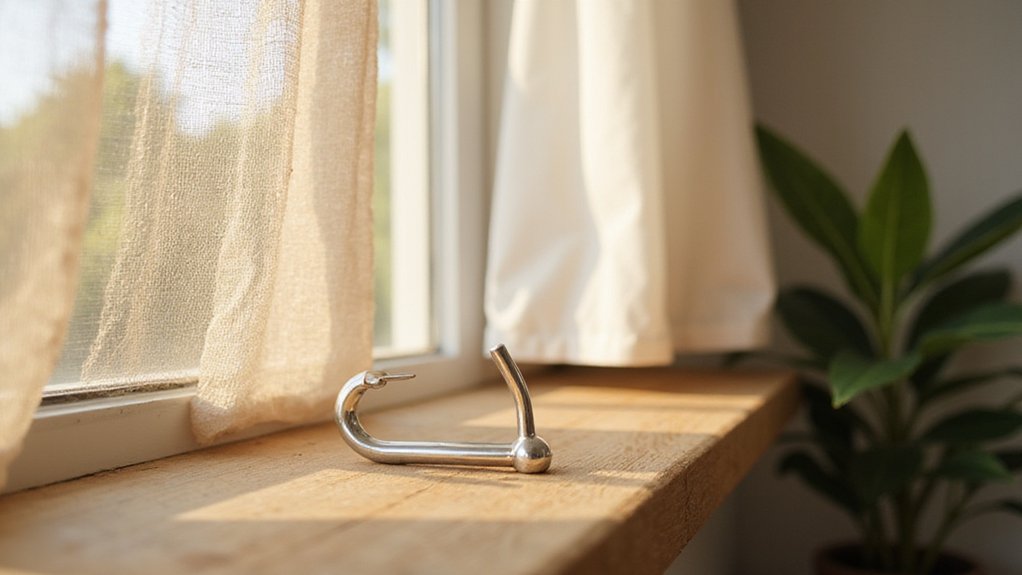
Visibility of the hardware also plays a role. Pin hooks slide behind pleats or heading tape, concealing the hardware for a clean, tailored appearance. S-hooks tend to stay exposed above the curtain, adding a decorative touch but sacrificing a seamless look. Clip rings reveal the clips, offering a modern style but showing hardware clearly. Your choice should balance how much hardware you want visible with the overall aesthetic of your drapes.
Pleat and Prong Curtain Hooks for Formal, Structured Drapes
Pleat and prong hooks hide the hardware within the fabric, providing a clean, tailored look for formal drapes. To install, slide the 4-prong hook into consecutive vertical channels of white header tape, then pull the pin upward until it’s fully concealed. For accurate pleat placement, measure about ½ inch from the header top to the top of the hook, which is typically the standard distance when using sliding rings. On the reverse side of the header tape, locate the pleat stitching lines to determine where to insert the pin. For a stable installation, ensure the ceiling light is turned off at the circuit breaker before beginning any electrical work nearby. Expert advice recommends always testing the hook placement on a small section of fabric first to confirm the desired pleat depth.
To maintain balanced pleat spacing, leave four or five channels between each hook. Place one hook at each pleat and add an extra at each side edge. Adjusting the number of skipped holes allows you to control the tightness of your pleats, giving you flexibility to soften or sharpen the structured look. The hidden pins ensure a seamless front appearance while supporting your drapes with a neat, polished finish. This technique creates a soft, elegant pleated look that is less structured than a French pinch pleat.
Specialized Curtain Hooks for Heavy Curtains, Corners, and Tracks
Heavy-duty hooks are essential for supporting thick drapes, blackout panels, or curtains taller than 30 feet. These hooks feature reinforced construction and steel wheels that roll smoothly inside ceiling-mounted tracks, providing strong support without damaging the fabric. Choosing the right track system ensures compatibility with specialized gliders designed for heavy curtains. For angled or corner installations, S-shaped hooks are ideal because they are discreet, easy to attach, and suitable for lightweight curtains or valances in complex spaces. Prong hooks also work well in these situations; they are made of stainless steel, maintain uniform pleats, and connect seamlessly with traverse rods to facilitate smooth gliding. Unlike standard pin hooks, which pierce through fabric for support, these specialized designs offer a non-piercing grip for heavier materials and complex setups. Additionally, multifunctional systems with interchangeable parts adapt to both corner setups and heavy fabrics, offering flexible sizing options. Comparing the top options for curtain hooks helps buyers find the perfect fit for their specific needs. Whether you prioritize style, cost, or function, these specialized hooks ensure your curtains stay functional and looking great, regardless of weight or window shape.

Galvanized Iron Unmatched Durability: Upgrade from flimsy plastic. Galvanized Iron hooks offering superior strength and a high load-bearing capacity. They won't bend or sag, providing a secure, reliable hold for your curtains season after season

Heavy duty Galvanized Iron Unmatched Durability: Upgrade from flimsy plastic. Galvanized Iron hooks offering superior strength and a high load-bearing capacity. They won't bend or sag, providing a secure, reliable hold for your curtains season after season

💪 Smooth and Durable Nylon Rollers: Engineered for effortless curtain movement, these nylon wheels glide seamlessly along curtain tracks.
Damage-Free Hooks: Magnetic, Adhesive, and No-Sew Options
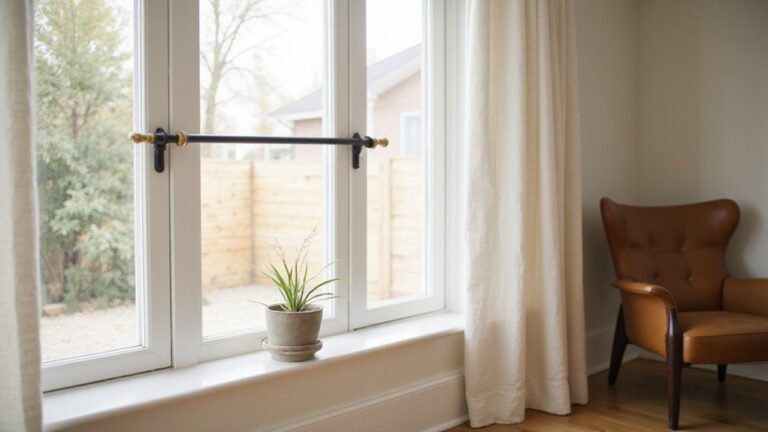
Magnetic hooks, adhesive hooks, and tension rods provide simple, damage-free ways to hang curtains, especially suitable for rental spaces or temporary setups. Magnetic hooks use strong magnets to support up to 15 pounds on metal surfaces like steel doors or window frames. They feature a slip-resistant rubber coating and require no tools—just press them onto the surface. Adhesive hooks rely on durable sticky backing for non-metal surfaces, supporting 8 to 12 pounds when applied to clean, dry, non-porous surfaces. To remove, warm the adhesive with water and peel off safely. Tension rods slide between your window frame to hold curtains up to 15 pounds without any hardware. All three options work best for lightweight curtains under 15 pounds, maintaining your walls in pristine condition. For a more permanent solution, building custom closet dividers from wood panels offers a sturdy alternative to these temporary hooks. A lava lamp turning into a big blob similarly results from overheating or incorrect bulb wattage, but allowing it to cool and restarting it often resolves the issue. To clean any curtains or fabrics used with these hooks, a gentle vacuum with a brush attachment is an effective method to remove dust without damaging the material.

【Window Cover Rod Brackets W Magnets】 Only Rod Brackets- No curtain Rod, no classroom cover, no door window blackout shade Included. They are only for display.

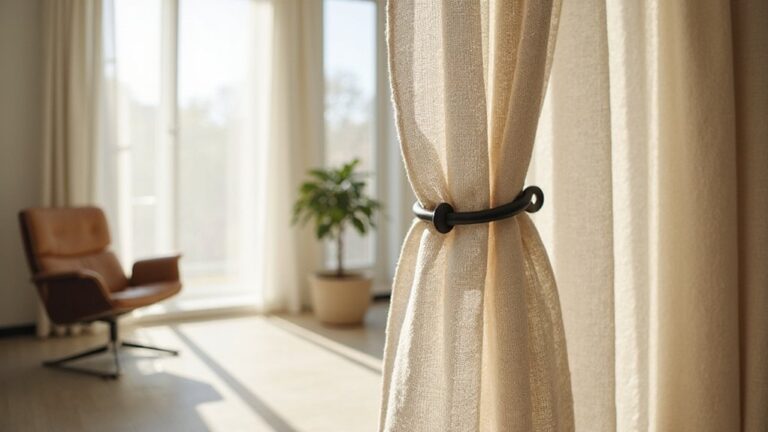
[Upgrade Powerful Magnetic] Our magnetic curtain tiebacks magnets use high-end new imported nickel-plated magnets, with strong corrosion resistance and durability, more magnetic than ordinary magnetic curtain tiebacks, and do not rust and not lose color. The rope of curtain tie adopts upgrade thickened solid polyester yarn, which is not only durable, but also not easy to wear or pilling.

【High-Quality and Durable】: Made from premium zinc alloy with a strong double-sided magnetic design, ensuring a secure and stable hold without slipping or falling
Decorative Hooks: Make Your Curtain Hardware a Design Feature
Decorative hooks make your curtain hardware a prominent design feature instead of an unnoticed detail. Material choices like vintage brass or polished nickel offer durability that ensures your investment lasts through daily use. Their aesthetic versatility allows you to match any interior style: crystal accents add a touch of luxury for formal spaces, while matte black finishes lend a sleek, contemporary look. These hooks are meant to be seen; they serve as intentional visual accents that draw the eye upward and emphasize vertical space. Ornate shapes and patterns can turn simple curtain rods into focal points, especially when using finishes like antiqued bronze for rustic charm or modern metallics for a minimalist vibe. For buyers prioritizing quality, a night light review can help assess how ambient lighting enhances the visual impact of these hooks. Fully functional, decorative hooks securely hold your curtains without sacrificing style, seamlessly integrating with formal pleats to elevate your entire window treatment. They often incorporate a sharp pointed end for hanging pinch pleated draperies effectively. For added security during installation, these hooks can be paired with vertical blind brackets to ensure stable support for heavier drapery materials. When selecting hardware, consulting top nightstand reviews can guide choices for bedside storage that complements your decorative hook style.