Wondering how to choose between a chifferobe and an armoire? The main difference is that a chifferobe has built-in drawers, while an armoire is just a tall cabinet with hanging space.
Your choice depends on whether you want more storage options or simply a closet solution. Keep reading to see which fits your space and needs best.
The Drawer Rule: The Only Difference That Matters
The drawer rule is your simplest way to tell a chifferobe from an armoire. If the piece includes built-in drawers, it’s a chifferobe; if it does not, it’s an armoire. This single visual cue matters most for classification. Typically, armoires are designed for hanging clothes, focusing solely on hanging space, while chifferobes combine hanging space with drawers to store folded garments or accessories. Unlike armoires, chifferobes offer more versatile storage for items beyond just hanging clothes. If you also need a surface for writing or display, you might consider a desk instead of a dedicated storage piece. One common issue affecting both pieces is LED bulb flickering, which can distract from their functionality.
Material durability doesn’t influence this rule—both furniture pieces can be made from the same sturdy woods. Historically, armoires originated as simple wardrobes for hanging clothes, whereas chifferobes were created to provide both hanging space and the convenience of multiple drawers. When you spot built-in drawers alongside the hanging rod, you have a chifferobe. Without drawers, it’s an armoire. This straightforward test helps you identify the furniture quickly, without guesswork.
What Is a Chifferobe? (Hanging Space Plus Drawers)
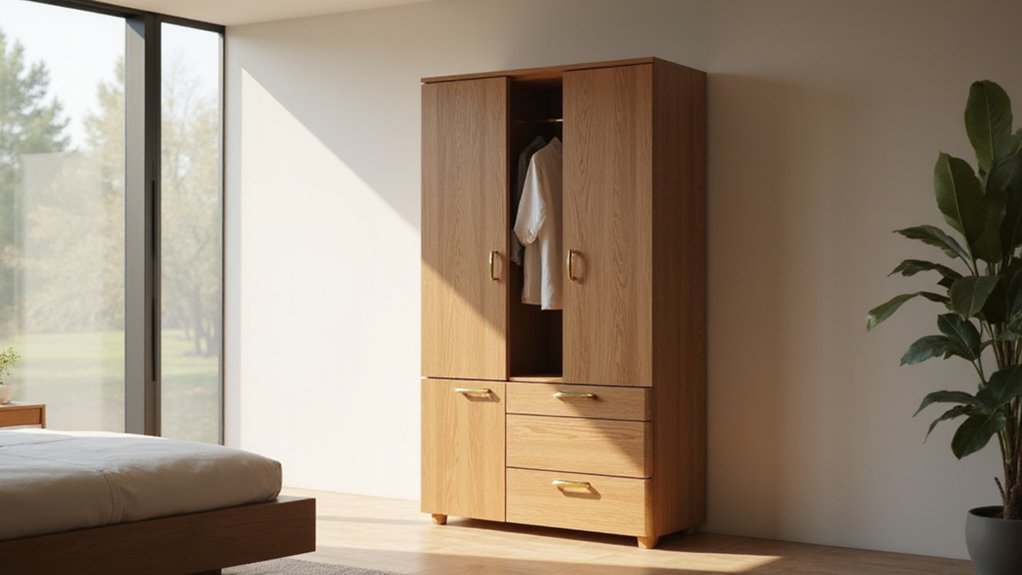
A chifferobe combines hanging space and drawers in a single piece of furniture. It features a section with a hanging rod for shirts, dresses, or suits, alongside a set of drawers for folded clothing like sweaters or undergarments. This dual-purpose design makes it an excellent choice for small rooms or spaces where a traditional wardrobe and dresser would take up too much room. Chifferobes can be made from solid wood or incorporate decorative elements such as mirrors, and they come in various finishes and styles. They originated from French furniture traditions, blending the functions of chiffonier and wardrobe into one versatile piece. You don’t need separate storage units—this furniture piece handles both hanging and folded clothing, streamlining your room organization. For a creative DIY alternative, you could adapt the principles of a lava lamp design to build a decorative chifferobe accent. If you run into issues with the built-in lighting, you can apply simple troubleshooting steps from a guide on fixing LED light strips to restore functionality. You might also use a Smart Bulb reset procedure to refresh any integrated lighting controls.
How Is an Armoire Different? (Tall Cabinet Without Drawers)
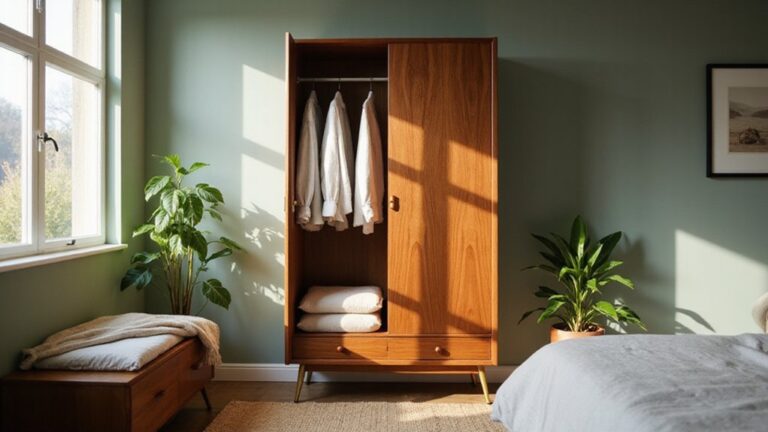
An armoire is a tall, freestanding cabinet designed primarily for hanging clothing. Unlike a chifferobe, which combines drawers and hanging space, an armoire features a single vertical cavity with no drawers interrupting the interior. It typically includes a central rod for hanging items like coats, suits, or dresses, often complemented by shelves for folded clothing or accessories. The doors swing open to conceal the contents, maintaining a tidy appearance in your room.
Materials vary, with options including solid wood for a classic look or engineered wood for a more budget-friendly option. Decorative finishes can add style and personality, turning your armoire into a statement piece. Historically used to store arms or tools, armoires have evolved into versatile storage for clothing or even multi-purpose use. Their robust, standalone design makes them a practical choice for maximizing hanging space without the interruptions of drawers.

AMPLE STORAGE SPACE: Answer all your storage needs with 2 cubbies, 5 makeup shelves, and dedicated spaces like 36 necklace hooks, 98 ring slots, 120 earring hooks, 60 stud holes, and a bracelet rod!

All-In-One Full Length Mirror & Jewelry Organizer: Tired of searching for a mirror and organizing jewelry separately. DUMOS freestanding jewelry armoire combines a 47.3-inch crystal-clear, distortion-free full-length mirror with a spacious jewelry organizer, allowing you to check your outfit and access your bling in one place. It’s lightweight and portable, perfect for placing in bedroom, bathroom, hallway, or even dressing room—meet all your daily makeup, dressing and jewelry storage needs
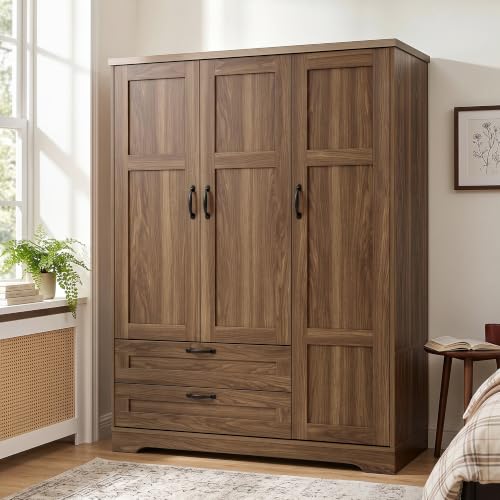
Premium Wooden Construction: Crafted from high-quality laminated composite wood, this tall wooden wardrobe ensures long-lasting durability and stability. The refined materials give this armoire a smooth finish that maintains its elegant look and reliable functionality over time
Interior Layout: Hanging Side vs. Drawer Side
When it comes to interior layout, the split between a hanging side and a drawer side is a key feature that enhances organization. The hanging section provides a full-length vertical space ideal for dresses and suits that need to stay wrinkle-free. You can place shorter items like shirts or jackets above the hanging rod, which maximizes vertical storage and improves accessibility. The drawer side is designed for folded clothes, accessories, and linens, reducing the need for a separate dresser and keeping items neatly stored. This layout allows for clear categorization: long garments are confined to one side, while smaller items stay in the drawers. For tighter spaces, you can allocate roughly 60 percent of the interior to hanging and 40 percent to drawers, adjusting based on your wardrobe needs. Understanding how dimmer switches work can similarly help you tailor lighting to different storage zones, enhancing both function and ambiance. When choosing window treatments for the room, consider that blinds offer more privacy and precise light control compared to sheer curtains. This split prevents overcrowding and makes it easier to find what you need at a glance. Overall, this design offers flexible organization within a compact footprint. For hanging curtains on the armoire’s rod, choosing the correct curtain ring sizes ensures smooth operation and proper panel fit.

Dual-Accessory Organizing Closets:Flank your jewelry collection with dedicated storage wings: two side closets feature 2 full-length doors with necklace hooks and 2 vertical earring hangers for 30+ drop earrings—no more tangles or misplaced studs. Perfect for displaying statement pieces while keeping daily essentials front-and-center, these built-in organizers transform morning routines into effortless access

【Hanging Area】This multifunctional wooden dresser features a hanging rod for convenient storage of coats and shirts, keeping them neat and wrinkle-free. The doors maintain privacy and protect garments from dust and sunlight, ensuring a tidy space

[Large-capacity storage]:This 3-door armoire offers a custom organization system. Store shirts, dresses, and jackets on the alloy hanging rod. Two extra-large drawers at the bottom easily handle personal items, while the right-side cabinet features adjustable shelves to keep your space tidy and perfectly configured.
Where Did These Confusing Names Come From?
The name chifferobe comes from a combination of two words: *chiffonier* and *wardrobe*. It’s a uniquely American term that first appeared in a 1908 Sears catalog. The word blends these two pieces of furniture—*chiffonier*, which refers to a small chest of drawers, and *wardrobe*, a tall, free-standing storage piece. This hybrid name reflects the furniture’s dual function of hanging clothes and storing folded items. Meanwhile, armoire has its origins in France, dating back to the 13th century, where it originally referred to a place for weapons. The transition to clothing storage may seem less intuitive given its military roots. You’ll find chifferobe mainly in the American South, whereas armoire enjoys broader international recognition. Their similar tall, free-standing design can cause confusion, especially since there are multiple spellings of chifferobe. For those seeking a similar glow, best salt lamp choices often help create a warm, relaxing atmosphere in any room. Understanding these origins helps you better choose materials, styles, and functionality when shopping for storage furniture. For those prioritizing compact seating with hidden storage, storage bench options offer a versatile alternative that balances style and function. For sliding glass doors, top vertical blinds offer a practical and stylish solution for light control and privacy.
Choosing a Chifferobe Over an Armoire: Best Use Cases
Choosing a chifferobe over an armoire is ideal when your storage needs are mixed, combining hanging clothes and folded items within one piece. It typically offers multiple drawers alongside a dedicated hanging space, allowing you to store socks, undergarments, and accessories efficiently without sacrificing room for shirts or blouses. This setup minimizes the need for a separate dresser, making it well-suited for guest rooms or children’s spaces where compact yet versatile storage is valuable. Chifferobes often emphasize organized separation with visible drawers, creating a modular, compartment-based system that makes it easy to keep everything in its place. They tend to be constructed from solid wood, ensuring durability against daily use. Their aesthetic leans toward a modern, utilitarian look with clear divisions between hanging and drawer sections, making them perfect when your wardrobe demands balanced storage rather than a single-purpose statement piece. For those prioritizing optimal night light quality and performance, a chifferobe’s compartmentalized design can also house a small illuminated shelf to improve visibility inside the hanging section. However, properly hanging a curtain rod in front of the chifferobe can enhance the overall look by framing the space and adding a soft, finished touch to the room. Applying window film to a nearby window can further reduce glare on that illuminated shelf, ensuring the light stays focused and effective.

Built to Last: This tall dresser is built with premium engineered wood and a reinforced frame; Features smooth-gliding drawers; It withstands daily use in bedrooms and active kids bedrooms, ensuring long-lasting reliability

EXQUISITE & COMFORTABLE: The four corners of the top of chest of drawers are provided with curved arcs to avoid accidental injury during installation and use. The handle is also exquisitely polished, and we always pay attention to the exquisiteness and comfortable use of the product.

【Natural Style】With a rustic look, VINGLI real wood 3 drawer dresser blends perfectly with various rooms such as contemporary, modern, cottage, shabby chic, or casual spaces. It plays well as a large nightstand, console table in the living room, and holds out-the-door necessities in the hallway
Best Choice for Small Rooms and Apartments
A chifferobe is an ideal choice for small rooms or apartments because it maximizes limited space. Its tall, narrow design combines hanging space with compact drawers, reducing the floor footprint and making it perfect for tight areas. Unlike larger armoires, which can dominate small rooms visually and physically, a chifferobe offers a sleeker profile that fits comfortably in confined spaces. The variety of color options and materials allows you to match it with your decor, enhancing the room’s overall aesthetic.
This hybrid piece lets you store folded items, hanging garments, and linens all in one unit, cutting down on the need for additional furniture pieces. It provides more utility per square foot by replacing both a wardrobe and a chest of drawers. The vertical design makes efficient use of height, giving you ample storage without sacrificing floor space. For small rooms and closets without built-in storage, a chifferobe delivers a practical, space-saving solution that keeps your belongings organized and accessible.

Customizable Storage: Features adjustable shelves with 18 positions and a sturdy hanging rod for flexible organization of clothes and accessories.

Armoire Wardrobe with DIY Adjustable Shelf: This wooden armoire cabinet offers 2 sturdy doors and 2 adjustable shelves to keep your apartment or bedroom essentials organized and easily accessible. This adjustable shelf has 18 adjustment holes to help you plan your wardrobe space. Remove the shelf to hang longer clothes. Place the shelf in the middle to hang shorter clothes. Placing the shelves on top and the clothes hanger on the bottom can facilitate teenagers to hang clothes.
Storage Versatility: Chifferobe vs. Armoire in Different Room Types
A chifferobe is particularly suited to small rooms because of its space-efficient design and versatility in adapting to various storage needs. In bedrooms, it provides a combination of hanging space and built-in drawers for folded clothes, making it easier to organize different clothing types with a segmented approach that an armoire typically doesn’t offer. For guest rooms, it consolidates clothing storage into a single piece, reducing the necessity for a separate dresser. In children’s rooms, its visible drawers help kids quickly find and separate small garments such as socks or underwear. However, in living rooms or media rooms, an armoire is the better choice since it can conceal electronics, books, or other media behind its doors, helping to maintain a clean, organized look. Armoire designs typically offer more material options and aesthetic flexibility, making them ideal for utility spaces like home offices where customizable storage is beneficial.

6-Drawer Organized Storage: This small vertical dresser features 4 roomy drawers for clothing and 2 compact top drawers perfectly sized for watches, ties, jewelry, and small essentials, keeping everything neatly sorted.

【Sufficient 7-Drawers Storage Space】Tall vertical dresser‘s 7 white drawers provide enough storage space to store your essentials and sundries. The thick wooden top is hard-wearing and waterproof, and can hold lamps, alarm clocks, vases or other decorative items. Drawers are suitable for organizing clothes, socks, underwear, scarves, blankets, etc.

AMPLE STORAGE: Featuring a spacious tabletop and 3 extra deep drawers, this 3 drawer chest offers you large amount of storage capacity to organize sundries and accessories, while adding a pop of glamour to your space
Questions to Ask Before Buying Either Piece
Before purchasing a piece of storage furniture, determine your storage needs by assessing how much hanging space versus drawer space you require. For a chifferobe, ensure the hybrid layout accommodates your mix of folded clothing and hanging garments. With an armoire, check if the interior shelves or compartments suit your stackable items.
Next, measure your room’s width, depth, and ceiling height since these pieces are often bulky and freestanding. Consider door swing clearance and the pathway for delivery to avoid issues during setup. Inspect the interior configurations carefully: chifferobes generally include drawers for folded items, while armoires tend to lack drawers but have shelves or compartments.
Evaluate the durability of wood finishes and panel thickness—thicker panels and quality finishes offer longer-lasting use. Examine hinges and slides, ensuring they operate smoothly for ease of access. If you plan to store linens or accessories, choose fabric materials that resist moisture; avoid moisture-prone fabrics in antique or vintage pieces. Lastly, verify that the design complements your décor, whether as a focal point or a subtle addition, and be aware of spelling variations like chifforobe in listings. For similar reasons, replacing a pendant light requires careful measurement of ceiling height and clearance to avoid installation issues. You should also verify that the electrical wiring is compatible and turned off at the breaker before starting any fixture swap. When working with lighting adjustments, always use the best practices for cutting materials to ensure clean edges and safe operation.