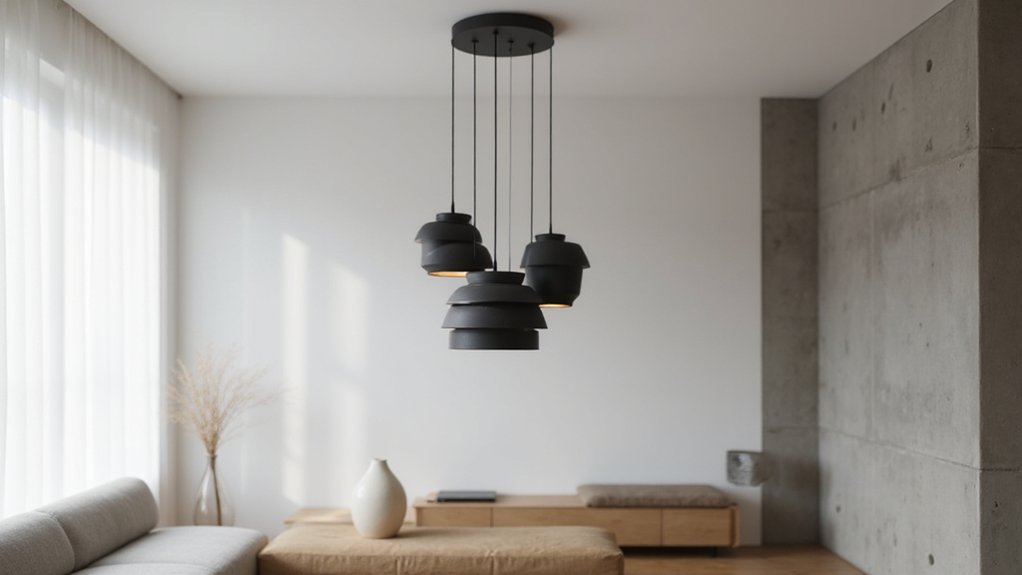
Struggling to choose the right ceiling lights can make a big difference in how your room feels. The key is layering different types of lighting—from bright ambient to focused task lights and decorative accents—to create a balanced and inviting space.
Understanding which fixtures work best for your ceiling height and room size is essential.
Keep reading, and you’ll learn how to select and arrange your ceiling lighting for a perfect touch.
The 3 Main Lighting Categories You Need to Know
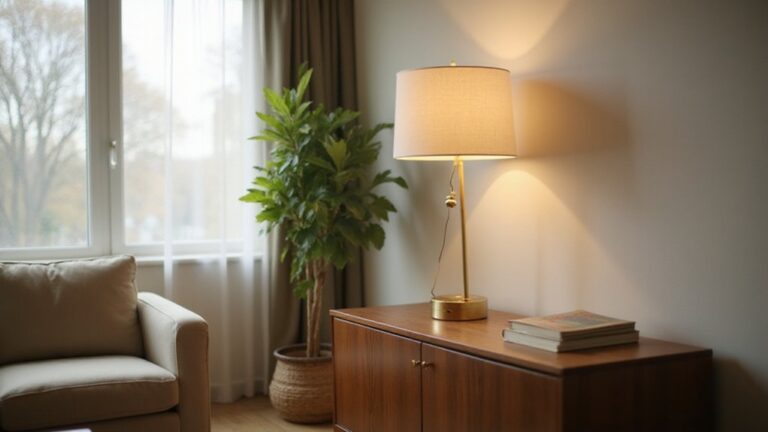
There are three main lighting categories you need to know: ambient, task, and accent. Ambient lighting offers overall illumination, helping you move safely and providing the room’s foundation. You typically achieve this with overhead fixtures, aiming for about 20 lumens per square foot. Task lighting delivers focused brightness for specific activities like reading or cooking and often requires up to 50 lumens per square foot on desks or workspaces. Accent lighting highlights particular features such as artwork or architectural details, using three times more light than your ambient layer to create visual depth and interest. For a top-performing night light, look for models that emphasize quality and performance to ensure consistent, reliable illumination through the dark hours. To prevent frustrating issues, check that any dimmable LED bulbs are compatible with your dimmer switch to avoid LED bulb flickering caused by incompatible wiring. When choosing a fixture for a desk, remember that vanity or desk decisions depend on balancing style, cost, and function for your specific space.
Incorporating light layering—combining all three types—creates a balanced, functional, and attractive space. When planning your lighting, consider color temperature: warm tones foster coziness, while cooler tones enhance visibility for tasks. Adding dimmers in each room allows you to adjust the brightness and mood as needed, enhancing your overall lighting experience.
Flush Mounts, Pendants, and Chandeliers: Which Ceiling Lights Should You Choose?
Flush mounts are ideal for low ceilings under 8 feet because they sit directly against the ceiling, maximizing headroom and providing diffuse, general illumination. They are especially suited for small spaces like closets and bathrooms where space is limited. For easy installation without hardwiring, a wall sconce light with plug offers similar space-saving benefits for wall lighting. Pendants hang lower and create a focal point, making them perfect for task lighting over kitchen islands or dining tables, but they can clutter space in rooms with lower ceilings. Chandeliers require taller ceilings to accommodate their height and make a dramatic statement; they add elegance and grandeur but may not be practical in smaller or lower-ceilinged rooms. Matching your fixture’s style to your room’s aesthetic enhances the overall design—sleek minimalism pairs well with flush mounts, while ornate chandeliers suit more traditional or luxurious decor. Maintenance varies: flush mounts are easier to clean since they are flush against the ceiling, whereas pendants and chandeliers often require more effort because of their hanging parts and exposed bulbs. For those seeking versatile organization solutions, using storage baskets can help keep such lighting components tidy and accessible.

3CCT Selectable Color Temperature: Select your preferred color temperature via the toggle switch on the fixture before mounting. Three preset tones are available: 3000K Bright White, 4000K Cool White, and 5000K Daylight. This fixture requires hardwiring to a standard ceiling J-Box (sold separately). Once installed, it works only with a regular ON/OFF wall switch for basic on/off control. Recommended for flat ceilings with pre-installed junction boxes.
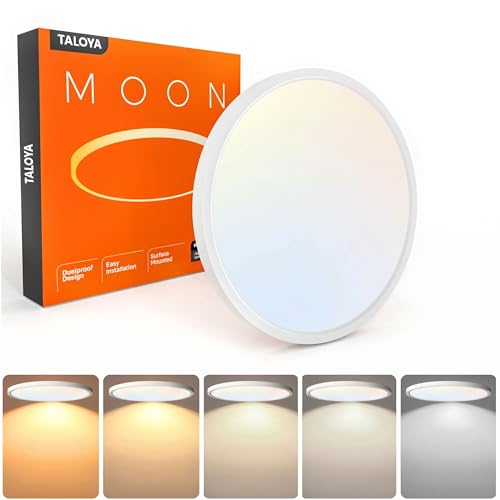
Why TALOYA?【Advantage 1- Eye-Friendly Lighting】:TALOYA flush mount ceiling light features high CRI for more natural and accurate colors, while flicker‑free, low‑blue‑light illumination delivers comfortable lighting that is gentler on the eyes during extended use.

【5CCT Selectable & Dimmable】 Choose Warm (3000K), Soft (3500K), Natural (4000K), Daylight (5000K), or Cool (6500K) to suit different rooms and tasks. Then adjust brightness from 10%–100% for relaxing, everyday use, or focused work.
Specialty Ceiling Lights: Cove, Strip, and Track Options
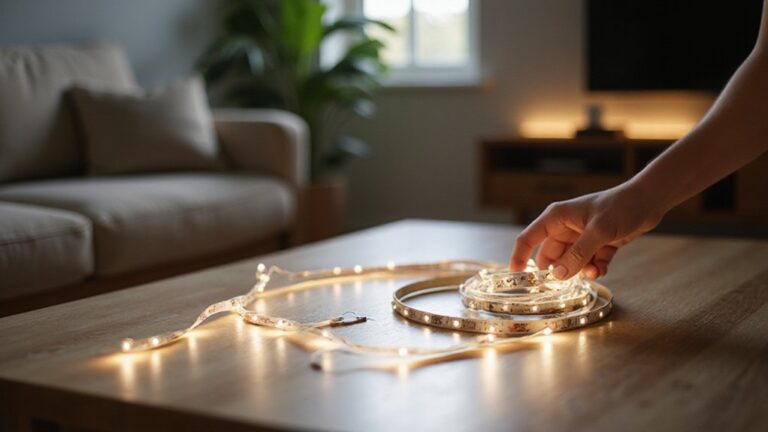
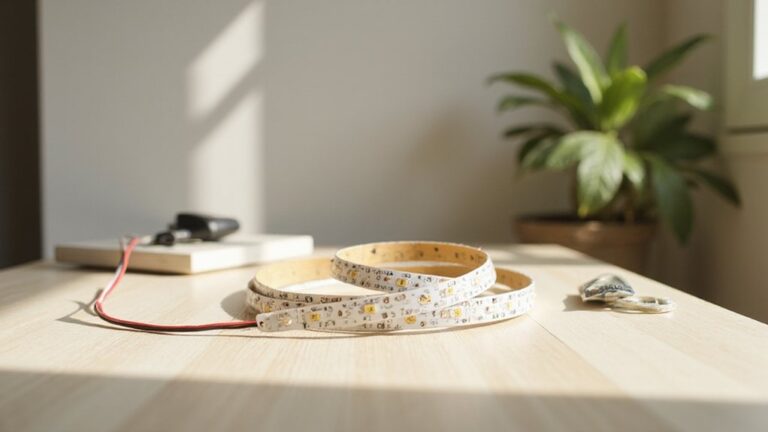
Specialty ceiling lights serve specific design and functional purposes beyond general room illumination. Cove lighting provides indirect, soft ambient glow by reflecting light off ceilings or walls, creating a sense of openness and reducing shadows. This setup offers a mood-enhancing atmosphere without visible fixtures cluttering the space. Strip lighting involves running long, efficient LED coils, which are ideal for hidden cove spaces or accent lines. These strips require minimal wiring and are highly versatile. For the best results, selecting a high-quality ceiling cover for light ensures the fixtures are properly concealed and diffused for optimal performance. Track systems are renter-friendly options that don’t need tools for installation; they snap into aligned clips for easy setup and adjustment. When controlled with dimmers or smart apps, these specialty lights allow you to customize your room’s ambiance with precision, combining aesthetic appeal with high efficiency. Properly installed clips spaced 12-in apart ensure sections butt flush for a seamless appearance, with the final step being snapping light tracks into brackets. For those with drop ceilings, can light drop installations require careful measurement and compatible housings to fit within the grid framework.
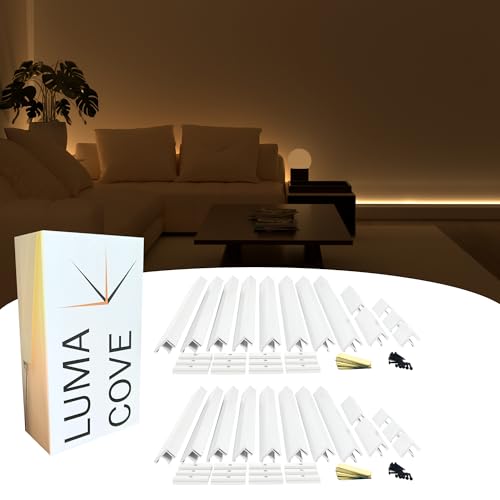
[SAY NO TO EXPOSED LED STRIPS] The Luma Cove is a modular channel assembly kit for the concealment of LED strip lighting. Simply mount the Luma Cove, place your LED strips in the channel, and enjoy the clean aesthetic of indirect lighting!

[SAY NO TO EXPOSED LED STRIPS] The Luma Cove is a renter friendly modular channel assembly kit for the concealment of LED strip lighting. Simply mount the Luma Cove, place your LED strips in the channel, and enjoy the clean aesthetic of indirect lighting!

Brilliant Illumination- Illuminate your space with an impressive 1380 lumens of 3000K radiant warm white light, perfect for enhancing visibility and creating a cozy ambiance while only using 18 watts of energy. Non-Dimmable.
How to Match Ceiling Lights to Your Room’s Height and Function
To match ceiling lights to your room’s height and function, start by considering ceiling height. For rooms under 8 feet, select flush or semi-flush mounts to maximize headroom, ensuring at least 7 feet of clearance from the floor to the fixture’s bottom. In rooms with higher ceilings, add 2–3 inches of hanging height for each extra foot of ceiling height to prevent the fixture from appearing too low. For pendant lights, hang them 72 inches from the floor for general areas or 30 inches above a dining table to provide effective illumination without glare. For higher ceilings, maintaining at least 8 feet of clearance from the floor is essential for safety and comfort. For more flexible applications, cutting LED strip lights to exact lengths ensures a perfect fit for custom lighting layouts.
Next, tailor lighting to each room’s purpose. In living rooms, choose fixtures with a diameter approximately equal to the sum of the room’s length and width in inches, aiming for a total of 150 to 300 lux for comfortable brightness. For dining areas, select a chandelier or pendant that’s half to two-thirds the width of your table, hanging 28 to 36 inches above its surface for balanced light and visual proportion. When lighting kitchen islands, position pendants 30 inches above the counter, with each fixture’s length about a quarter to a third of the island’s length to ensure even illumination and minimize shadows. Accurate measurements and careful planning are essential to achieve functional, aesthetic lighting tailored to each space.

3CCT Selectable Color Temperature: Select your preferred color temperature via the toggle switch on the fixture before mounting. Three preset tones are available: 3000K Bright White, 4000K Cool White, and 5000K Daylight. This fixture requires hardwiring to a standard ceiling J-Box (sold separately). Once installed, it works only with a regular ON/OFF wall switch for basic on/off control. Recommended for flat ceilings with pre-installed junction boxes.

Sleek Modern Design: This contemporary flush mount ceiling light features a low-profile housing that sits neatly against the ceiling, ensuring smooth clearance for closet doors. Its durable metal frame comes in a brushed nickel finish, paired with a white plastic diffuser that evenly distributes bright, shadow-free illumination.
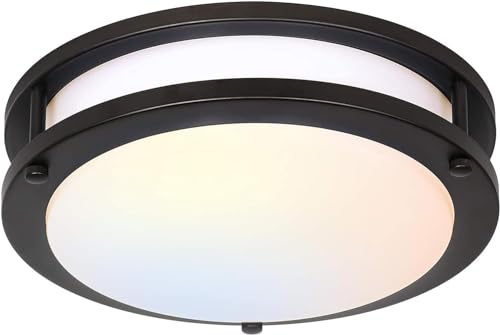
Sleek Modern Design: This contemporary flush mount ceiling light features a low-profile housing that sits neatly against the ceiling, ensuring smooth clearance for closet doors. Its durable metal frame comes in a black finish, paired with a white plastic diffuser that evenly distributes bright, shadow-free illumination.
Ceiling Light Selection: Measure Size, Check Height, Save Energy
To ensure a proper fit, measure your room’s dimensions. Add the width and length in feet to determine the diameter of the fixture in inches. For example, a 12×14-foot room requires roughly a 26-inch fixture, which can be adjusted by about 10% to match your style. Accurate sizing helps prevent light wastage and creates a balanced look.
Check your ceiling height as well. You need at least 7 feet of clearance from the floor to the bottom of the fixture to avoid head bumps and maintain safety. For rooms with higher ceilings, consider whether you want a larger fixture and possibly longer hanging chains or rods for aesthetic balance.
Opt for LED fixtures when aiming to save energy. They consume significantly less power while providing ample ambient or task lighting. For focused work areas like kitchen counters, position pendant lights 30 to 36 inches above the surface. In hallways, install flush-mount fixtures every 8 to 10 feet to achieve consistent illumination. Proper sizing and placement are key to efficient lighting that matches your space and needs.

26" Geometric Ceiling Fan with Light : This 2-in-1 black modern ceiling fan with light brings you lighting and cool wind, keeping your home fresh and fashionable. Suitable for rooms ranging from 150 to 250 ft², such as bedroom, living room, kitchen, apartment, restaurant, bar, hotel, office, hallway, children's room or nursery etc.

【26" Large‑Size: Airflow & Bold Visuals】Boasting a 26-inch metal caged frame, the fan delivers expanded airflow coverage versus smaller‑sized fans with striking farmhouse‑rustic styling. Available in matte black and black‑gold finishes to match diverse home decors, the flush mount ceiling fan can saving valuable vertical space — ideal for living rooms, bedrooms, kitchens, and larger rooms with low clearance.

Upgraded 26" Fan Light: Our upgraded large ceiling fan with light provides more extensive airflow and lighting coverage. It is perfect for medium to large spaces, ensuring powerful and efficient air circulation in your master bedroom or living room