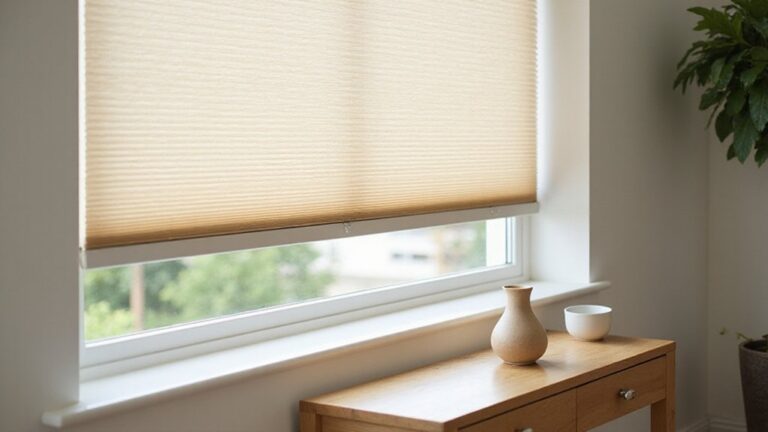
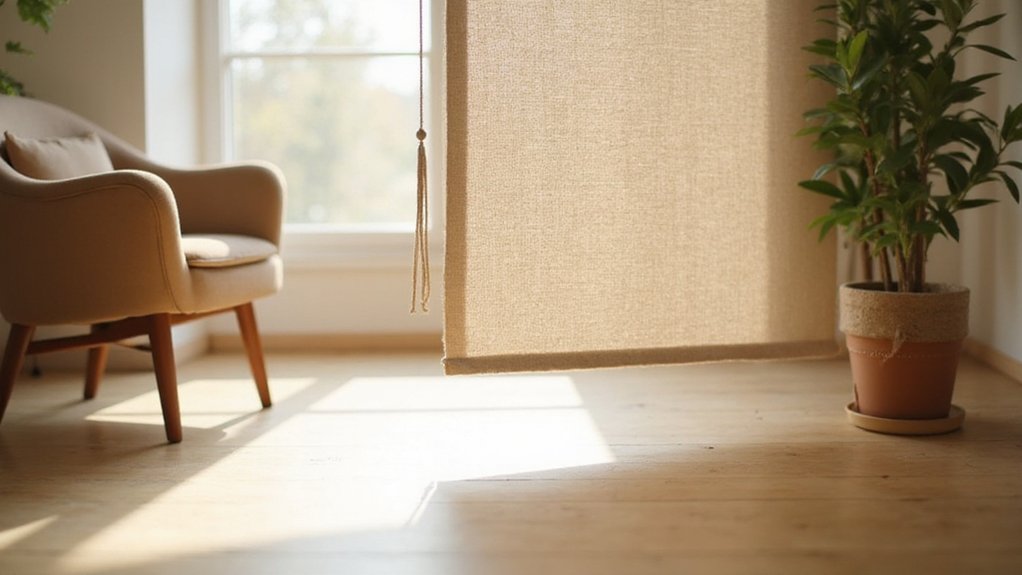
If your fabric roller blinds look dull or stained, you might wonder how to clean them without causing damage.
The good news is that with the right gentle approach, you can keep them looking fresh and extend their lifespan.
In this guide, you’ll learn simple steps to refresh your blinds safely and effectively.
How to Clean Fabric Roller Blinds in 5 Simple Steps
To clean fabric roller blinds effectively, start by fully rolling them down. Vacuum both sides with a soft brush attachment on low suction to remove loose dust without pushing debris deeper into the fabric. Next, prepare a mild soapy solution by mixing a gentle detergent with lukewarm water. Dampen a microfiber cloth until it’s barely moist and wipe the fabric from top to bottom, following the weave to avoid damaging delicate fibers. Keep nearby furniture out of the way to prevent drips and stains. For light filtering blinds, avoid harsh chemicals like bleach—use only gentle cleaners to preserve their delicate structure. When addressing stains, blot them rather than rubbing to prevent spreading or embedding the stain further. Rinse the cloth with clean water and go over the fabric again to remove soap residue. This process is similar to the step-by-step instructions for removing stubborn residue from window film. Finally, allow the blinds to air dry completely before rolling them back up. Doing so helps preserve the fabric’s appearance, prevents mildew, and maintains the light filtering properties of your blinds. You may also use a soft brush attachment on a vacuum cleaner for regular maintenance, as this is a method recommended for other blind types. To maintain smooth operation, apply silicone spray to the spring mechanism if the blind has spring operation. Keep in mind that selecting the right furniture for the room, whether a vanity or desk, impacts the overall ease of cleaning such window treatments.
Tools and Supplies You’ll Need Before You Start
Before you start cleaning upholstery, gather the necessary tools and supplies to do the job effectively and safely. Begin with a vacuum equipped with an upholstery brush attachment—it gently lifts loose dirt without damaging the fabric. For testing cleaning methods, choose a soft-bristle brush for cotton or microfibre cloths for synthetics. You’ll need a bucket, a spray bottle, and a mixing bowl for preparing cleaning solutions, plus a separate container for plain rinsing water to avoid cross-contamination. Wearing protective gloves and a mask is essential to shield yourself from dust and cleaning agents. To dry the fabric quickly without risking heat damage, use a fan or a hairdryer on a low, cool setting, avoiding direct heat contact. Opening a window for ventilation ensures good airflow during and after cleaning. Before applying any cleansers, pre-clean the window frames with a damp sponge to remove dust or dirt that could transfer to the fabric. Have a mild dishwashing detergent ready to mix with lukewarm water, as harsh chemicals or bleach should be avoided to prevent damage to the blinds. Measuring spoons and a whisk ready to accurately mix cleaning solutions, ensuring consistency and effectiveness. If you notice unexpected flickering from lights in the room, this may indicate an incompatible dimmer switch that requires replacement to ensure stable operation. For any LED strip lights near the blinds, remember that cutting the strip at designated points is the smartest way to avoid damaging the circuit. When hanging fairy lights near your blinds, always use the correct mounting clips to ensure they stay securely in place without damaging the fabric.

Rich Package: The chaseroad 3PCS Horse Hair Brush shop vac accessories set, which includes 2 durable and scratch-resistant brushes, 1 vacuum adapter (1 1/4″ to 1 3/8″). Our round brush attachment works on a variety of surfaces, making it easy to keep your home clean and as convenient as possible.
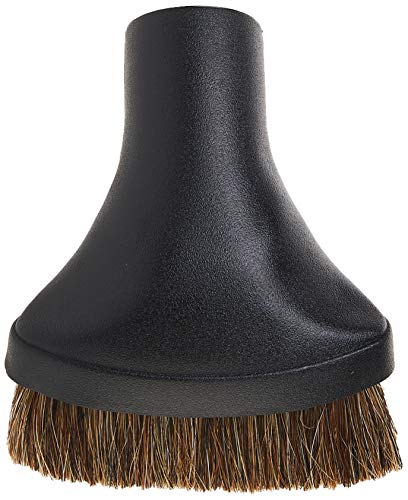
This vacuum accessory will fit all major canister vacuums, upright vacuums and central vacuum brands with 1.25 Inch connections
How to Mix a Safe DIY Cleaning Solution for Fabric Blinds
To mix a safe DIY cleaning solution for fabric blinds, start with a solution of lukewarm water and a gentle dish soap. Use about 1 teaspoon of dish soap for every 1 quart (4 cups) of water, which keeps the detergent concentration around 5%. This gentle mix helps protect the fabric fibers and coatings while effectively cleaning. For tougher stains, like mold or mildew, add a small splash of white vinegar—around one tablespoon per quart. Be careful not to soak the fabric, as excess moisture can damage the backing or cause warping. Never use bleach, as it can strip color and weaken the fabric’s texture. Before cleaning, always test your solution on an inconspicuous area to check for discoloration. After spot cleaning, rinse with plain water using a barely damp cloth to avoid water wicking into the top tube or bottom rail, which could lead to damage. This method helps keep your fabric blinds fresh without risking their structural integrity. For a more comparable energy-efficient lighting option, consider LED bulbs which offer longer life and lower heat output. For proper disposal, consult local guidelines for electronic waste instead of throwing them in the trash.

Removes Both Oil & Water-Based Stains

StainLift Technology. Lift and remove deep down dirt, stains and odors.

Powerful stain removal: This upholstery foam cleaner removes stubborn stains without leaving residue, quickly restoring carpets to a pristine state.
How to Vacuum and Dry Dust Both Sides of the Blind
To vacuum and dry dust both sides of a blind effectively, start by fully extending the blind to reveal the entire surface. Use a soft upholstery attachment on your vacuum and set the suction to low or medium to avoid bending or damaging the fabric. Begin at the top, working downward with vertical, overlapping strokes. Use an S-shaped pattern to reach creases and folds. Be sure to clean the edges and the back surface, as dust often collects there, especially near cobwebs.
For dry dusting, a feather duster or microfiber cloth works well for regular maintenance. Wrap a cloth around your hand and gently apply light pressure to lift dust without pushing it deeper into the fabric. After vacuuming, ensure the blind is completely dry before rolling it up. If you’ve used any cleaning foam, let it air dry overnight to prevent mold or water stains.
How to Spot Clean Stains Without Ruining the Fabric
To spot clean stains without damaging the fabric, act quickly. Fully lower the blind and blot excess liquid with a clean white cloth, avoiding rubbing since that can spread the stain. It’s essential to consider the fabric type before choosing a cleaning method. Always test any cleaning solution on an inconspicuous spot first to prevent discoloration or damage.
Mix a small amount of mild dish soap with lukewarm water—hot water or bleach-based products should be avoided. For water stains specifically, combine equal parts white vinegar and distilled water. Dampen a microfiber cloth with your chosen solution and gently dab from the outside of the stain inward to contain it. Use light pressure to prevent pushing the stain deeper into the fabric. For stubborn grime, a soft brush can be used to gently lift dirt following the fabric’s weave. Keep the roller tube dry throughout the process to prevent mold or warping.
Once cleaned, use a clean, damp cloth with plain water to rinse away any soap or vinegar residue. This step helps prevent dirt from adhering to residual cleaning products, which can attract future stains. Blot dry with a clean towel or cloth and allow the fabric to air dry completely. Proper spot cleaning helps maintain fabric integrity and prolongs the lifespan of your blinds.

REUSABLE MICROFIBER MITT: Slip-on cleaning glove traps dust and hair for faster wipe-downs; rinse or machine wash and reuse, so you can replace disposable wipes; elastic cuff helps keep the mitt in place while cleaning around the home.

Elite Screens Efficiency: Experience the superior cleaning capabilities of the Elite Screens Microfiber Cleaning Cloth, ideal for eyeglass cleaning cloths and maintaining electronic screens. This oversized 12" x 12" cloth ensures a streak-free and scratch-resistant finish
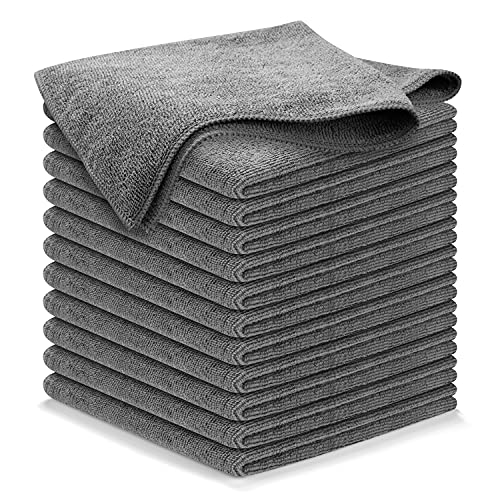
10x GRIP-ROOT WEAVE - TRAP MORE, WORK LESS: Ultra-absorbent microfiber towels for car Grip Root weave works like PLANT ROOT FOLLICLES, sucking up & LOCKING AWAY 8x to 10x its weight in liquid, particulates, moisture, grime and dirt in far LESS TIME than traditional ‘Heavy Duty’ Cleaning Rags. Each towel features a 2.5mm thick design, providing enhanced durability and better grip during use.
How to Wash Fabric Roller Blinds Without Damaging Them
To wash fabric roller blinds without damaging them, use a gentle cleaning method. First, determine if washing is necessary—only do so when there are visible stains or significant dirt buildup. Mix one drop of mild dish soap into a cup of lukewarm water, avoiding hot water, bleach, or solvents that can harm the fabric or coating. This approach aligns with the concept of window valances as a functional and decorative element that requires careful maintenance to preserve its style and structure. Similarly, battery-operated string lights are a versatile option that require gentle handling to maintain their wiring and casing. This careful approach mirrors the precision needed during dimmer switch installation to avoid electrical hazards. Next, take a clean cloth, wring it until barely damp, and gently press and blot any stains. Never rub, as this can cause pilling and damage the fabric. Work from top to bottom in horizontal sections, rinsing the cloth frequently to remove dirt. Be careful not to let water pool or wick into the top tube, edges, or bottom rail, as excess moisture can cause warping or mold. Avoid machine washing, soaking, or submerging the entire blind, since this can separate the fabric backing and ruin the structure. Additionally, keep moisture away from the operating mechanism to prevent stiffness or malfunction. Proper care ensures your fabric roller blinds stay clean and in good condition without damage.

【Product Detail]】The total size of the roller blind is 23'' X 68''. The fabric size is 22'' X 68''. The fabric width is 1'' narrower than total width. NUTRO CHILL Roller blind fabric is thick and durable with 100% blackout.

【Quality service】We will use the top logistics provider for delivery, and provide 24 months warranty service, if there is any problem with the product, please feel free to contact us, our most professional after-sales team will solve your problem by the best way.

【Safety】Joydeco cordless roller blind providing a child-safe, pet-safe, and senior-friendly environment. The cords on corded blinds can pose a strangulation hazard to small children (and pets), so Joydeco cordless blinds and shades can bring additional peace of mind.
How to Dry Blinds Fast Without Wrinkles or Mold
To dry your fabric roller blinds quickly without wrinkles or mold, start by fully lowering them so gravity helps pull out excess water. Leave them hanging in a warm, well-ventilated room for 24 to 48 hours. To tackle stubborn creases, attach small weights to the bottom edge to stretch the fabric evenly. Open windows to promote fresh air circulation, but avoid direct sunlight on delicate fabrics to prevent fading. Use a hairdryer on the cool setting, held about 20 to 30 centimeters away, to accelerate drying without damaging the material. Never roll up damp blinds, as trapped moisture can lead to mold growth. To prevent folds when rolling, maintain even tension across the width of the blind. Once dry, re-hang the blinds immediately and run a few full cycles to help them settle into their proper shape.
How to Clean Blind Chains, Cords, and Mechanisms
To clean blind chains, cords, and mechanisms without damaging the fabric, follow these steps. First, wipe the chain with a damp cloth soaked in warm water and a small amount of mild detergent to remove dust. Use an old toothbrush to loosen dirt from joints and hinges. For a deeper clean, detach the chain and soak it for 15 to 20 minutes in a solution containing a splash of white vinegar. After soaking, scrub stubborn stains with a mixture of equal parts vinegar and washing-up liquid. This method uses the same budget-friendly materials found in a DIY lava lamp. For added safety when working from height, consider using a sturdy step ladder to reach ceiling-mounted fixtures.
For pull cords, prepare a cleaning solution by filling a plastic bag with bleach and hot water. Insert the cord into the bag and leave it submerged for about an hour to remove dirt and mold. After cleaning, apply silicone spray to the roller tube and mechanism to lubricate moving parts and prevent squeaking. Make sure to dry all components thoroughly with a microfibre cloth before reattaching to prevent rust or mould buildup. For nursery use, a sturdy dresser with smooth mechanisms helps prevent accidents with cords.

Lubricates, waterproofs and protects

H1 Food Grade Certified – NSF-approved for incidental food contact; ideal for food processing environments.

Lasting protection for any hot surface up to 1200 degrees Fahrenheit
5 Common Mistakes That Ruin Fabric Blinds
Overwatering the fabric is a common mistake that can ruin fabric blinds permanently. Using too much water during cleaning causes water stains, warps the material, and traps moisture, which can lead to mold and a bad smell. Additionally, excess water dissolves the stiffening agent that helps the blind hang properly, causing it to lose its shape. To avoid damage, use a damp, not soaked, cloth and minimize water contact with the fabric. Just as with ceiling lights, turning off the power before cleaning electrical fixtures is a critical safety step.
Aggressive rubbing or scrubbing should be avoided at all costs. Such methods spread stains deeper into the fabric and can damage its texture, leading to pilling and fraying. Instead, gently blot the fabric with a soft cloth or sponge. Patience and gentle pressure deliver better cleaning results without harming your blinds.
Ignoring proper drying is another mistake that can damage fabric blinds. Rolling or folding damp fabric traps humidity inside, which encourages mold growth and produces stubborn odors. Always allow the fabric to air dry fully before raising or rolling up the blinds again. Proper drying helps maintain the fabric’s integrity and cleanliness.
Using harsh chemicals like bleach on fabric blinds can strip away protective coatings and damage the fabric’s appearance. These chemicals may effectively remove stains but at the cost of ruining the blind’s colors and texture. Opt for mild, fabric-safe cleaners designed for delicate materials to preserve the look and longevity of your blinds.
Finally, removing blinds from their brackets to soak them can cause serious internal damage. Soaking may weaken or break the internal springs and metal parts, risking a costly repair or replacement. Keep the blinds mounted and clean them with a damp cloth, avoiding full immersion to protect the internal mechanisms and ensure your blinds stay functional.
How Often to Clean Fabric Roller Blinds for Lasting Results
Cleaning fabric roller blinds every 2 to 3 months is generally sufficient for standard environments. However, in kitchens, dusty areas, or homes with pets, smokers, or high pollution, deep clean more frequently—every 1 to 2 months. If your living space experiences high humidity or poor ventilation, increase cleaning frequency to prevent mold buildup. Regular dusting every 1 to 2 weeks using a soft brush or microfiber cloth helps maintain appearance and prolong fabric life. Address spills immediately to avoid permanent stains. During deep cleaning, keep all hardware dry to prevent rust or corrosion and avoid using harsh chemicals that could damage the fabric. For mini blinds, a vacuum with a brush attachment is often recommended for effective dust removal between deeper cleanings. To prevent sagging, ensure you use proper wall anchors when hanging the curtain rod that supports your blinds.