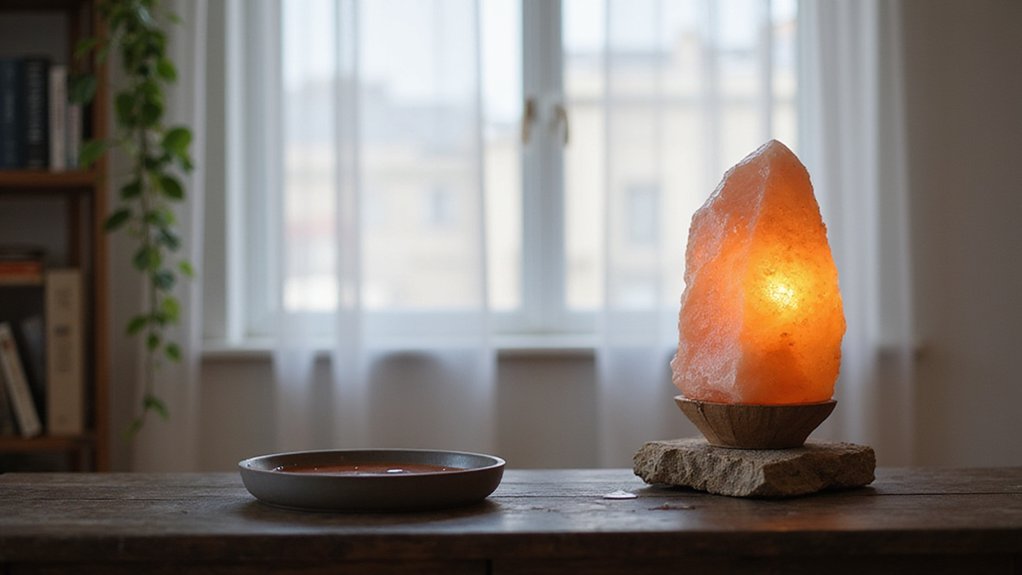
If your salt lamp is leaking, you might wonder if something’s wrong.
In fact, a leaking salt lamp usually means it’s working as it should, thanks to the salt’s natural tendency to pull moisture from the air.
This process helps purify your space and isn’t a defect.
Keep reading to understand why leakage happens and how to manage it without losing the lamp’s benefits.
Is Your Salt Lamp Leaking? Here’s Why It’s Normal
A salt lamp leaking is a normal sign of authenticity. These “crying” or “sweating” lamps confirm you have genuine Himalayan salt. Real salt is hygroscopic, meaning it naturally attracts moisture from the air. As a result, your lamp absorbs humidity even when turned off, which helps to purify the surrounding air. The dampness you see is just salt water leaving the salt surface, not a defect or leak. This process is a sign your lamp is functioning correctly—enhancing your space naturally and efficiently. Unlike LED bulbs, where flickering indicates issues such as poor connections or incompatible dimmers, a salt lamp’s moisture is a natural, positive sign of its mineral properties. Embrace the leak as proof of quality, and know that it indicates your salt lamp is working as intended. To address excess dampness, you can follow simple organizational tips similar to the principles used in a chest of drawers, such as placing your lamp on a coaster or tray. For routine maintenance, you can use a damp cloth to gently wipe away any accumulated salt residue.
Why High Humidity Causes Salt Lamp Leaking
High humidity causes salt lamps to leak because the excess moisture in the air surpasses the salt’s natural absorption capacity. When humidity levels rise, your lamp draws in more water vapor than it can hold, leading to the salt actively releasing moisture as it attempts to reach equilibrium. This results in visible salt moisture or small droplets forming on the surface and dripping down. This leakage is a sign of the lamp’s hygroscopic nature, which means it naturally attracts and holds water from the environment.
In humid settings, the salt lamp absorbs water rapidly, and when the lamp is turned off, the cooling effect causes this moisture to condense into droplets on the surface. You are likely to see more leakage in damp rooms like kitchens, bathrooms, or basements where moisture is more abundant. To minimize dripping, keep your lamp running continuously so the heat from the bulb helps evaporate the absorbed moisture. Also, avoid placing your lamp near open windows or in highly humid areas. Using a dehumidifier can help control air moisture levels, keeping your salt lamp dry and less prone to leaking. Consider whether a salt lamp is the perfect fit for your space, just as you would weigh style, cost, and function when choosing between a vanity or a desk.
The Right Bulb Wattage to Prevent Salt Lamp Leaking
Choosing the correct bulb wattage is essential to prevent salt lamp leakage. For salt crystals weighing up to 10 pounds, use a 15-watt bulb. This wattage provides enough warmth to evaporate moisture without generating excess heat that can cause the lamp to leak. Larger lamps between 11 and 20 pounds need a 25-watt bulb, while those over 21 pounds require a 40-watt bulb for proper moisture management. Avoid using a 50-watt bulb in smaller lamps, as it produces too much heat and can trigger leakage immediately. For spaces requiring adjustable light, consider that single or double cell shades offer different insulation and light-filtering properties that complement lamp performance.
To ensure electrical safety and prevent damage to the crystal, select thin-shaped bulbs that do not come into contact with the salt. Always screw the bulb in clockwise to secure it tightly. Pair the correct wattage with at least 16 hours of daily operation; this duration allows the bulb to warm the lamp consistently and evaporate excess moisture. If leakage continues despite using the appropriate wattage, check for faulty cords or debris blocking heat from reaching the salt to ensure proper functioning. Additionally, consulting a guide to best night lights can help you choose bulbs that match high standards of quality and performance.

[Widely Used] : The OHLGT Salt Lamp Bulb will fit most Himalayan salt lamps on the market and is the perfect replacement bulb for our OHLGT Salt Lamp Cord with Metal Clip and Base Assembly. Note: The bulb can only be dimmed if the salt lamp has a dimmer switch.

EXCELLENT AND SAFE LIGHTING OUTPUT: This E12 T20 15 Watts is a high-quality salt rock lamp bulb. Gives you super bright light that will brighten your entire home. These E12 T20 type bulbs use a voltage of 120V. Safe to use, use with no doubts

Efficient Wax Melting: Snnalosses 15W C7 wax warmer bulbs use advanced filament heat technology to quickly melt wax cubes without flame, smoke, or pollution, ensuring a safe and clean environment
How to Fix Cracked Salt Lamps That Leak More
To fix a cracked salt lamp that leaks more, apply E6000 adhesive directly to the broken pieces and press them together firmly for 4 to 5 minutes to seal the crack. Immediately wipe away any excess adhesive that seeps out of the seam. For added strength, use epoxy to bond the cracks after supporting the major parts on a wooden base. This reinforces the structure and helps prevent further leakage. When choosing a repair method, consider that solar window film offers similar privacy benefits by allowing you to see out while blocking the view from outside.
Next, drill a new hole in the wooden base that aligns with an existing hole or provides better stability. If the crack is extensive, create a plaster mold using the broken pieces as a plug. Fill the mold with distilled water and salt, allowing it to dissolve and recrystallize to help seal the damage. Once the mold is set, remove it and let the lamp dry in direct sunlight for several days. This ensures full hardness and prevents future leaks before reassembling the lamp. When considering whether to repair or replace the lamp, weigh its style, cost, and function against other options.

E6000 PLUS offers virtually the same performance characteristics you love about E6000 but with Low odor
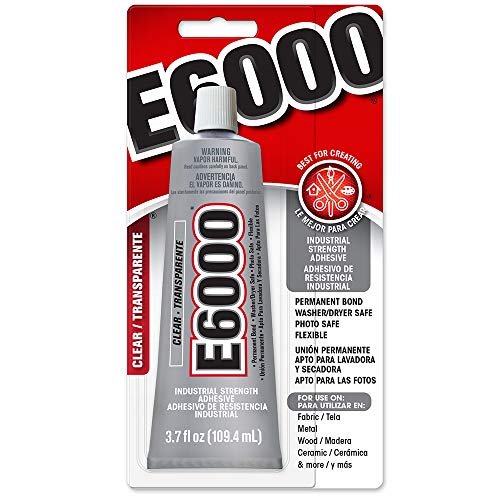
Bonds to glass, wood, plastics, tin, metal, ceramic, cement, rubber, vinyl, leather, fabric and much more

E6000+Plus Multipurpose Adhesive EU Compliant
5 Habits to Stop Salt Lamp Leaking for Good
To stop salt lamp leaking for good, maintaining consistent heat and controlling moisture is key. Run your lamp for at least 16 hours each day, ideally keeping it on around the clock, to generate enough warmth for evaporation. Avoid turning it off for extended periods, as moisture can accumulate when the lamp isn’t hot enough to dry out. Similar to a lava lamp that remains functional only when its heat source is properly maintained, your salt lamp requires steady heat to prevent degradation.
Manage indoor humidity levels carefully by staying away from moist areas like kitchens and bathrooms. Using a dehumidifier or moisture absorbers such as Damprid can significantly reduce humidity and prevent excess moisture from condensing on the salt. For example, choosing a hanging pendant light with plug that generates higher heat output can similarly help reduce moisture buildup in enclosed spaces.
For cleaning, wipe your salt lamp daily with a dry microfiber cloth, avoiding water or washing. If needed, use a slightly damp cloth only when necessary, then dry it immediately. Increase the wattage of your bulb to 25–30 watts, instead of low-wattage or LED bulbs, to produce more heat.
Lastly, always place your salt lamp on a waterproof coaster or ceramic dish to catch any drips. The same attention to moisture control applies to can light drop ceilings when installed in humid environments. These precautions will help ensure your salt lamp stays dry and functional, stopping leaks for good.

Replacement Light Bulbs for Wax Melt Warmer: This 25w c7 bulb uses filament heat technology to generate the necessary heat for melting wax cubes. By emitting heat through the bulb, it achieves a flameless, smokeless, and pollution-free effect, effectively eliminating fire hazards. It is the perfect heat source for melting wax cubes

High Quality: Salt lamp bulbs Built with premium low-light-decay tungsten wire, these C7 incandescent bulbs stay bright even after long-term use. With 2,500+ hour lifespan, they reduce the need for frequent replacements and deliver dependable, long-lasting performance for wax melt warmers and salt lamps.

15 Watt wax warmer replacement bulbs: Replace original 15 watt plug-In wax warmer bulb, wax diffuser,candle & wax warmers