If you want to enjoy surrounding views without sacrificing your privacy, one-way window film might be what you’re looking for.
It creates a reflective barrier during the day, letting you see out while blocking others from looking in.
But understanding how it works and when it’s most effective will help you get it just right.
The full details are right below.
What Exactly Is One-Way Window Film and How Does It Work?
One-way window film is a reflective privacy film that creates a mirror-like appearance on the brighter side of glass. It consists of a thin polyester layer coated with a metallic material, such as silver or aluminum, sandwiched between protective layers. This design ensures the film is durable and resistant to scratches and daily wear, allowing it to last over time. Instead of absorbing light, the film reflects it, significantly boosting the window’s natural reflectivity—up to four times higher than untreated glass. As a result, it bounces roughly 60% of external light back outside. From the darker interior side, you can see through the glass clearly, while the brighter outside remains obscured. This semi-reflective property works through an optical illusion: the coating reflects more light than it transmits, giving the exterior mirrored appearance without sacrificing your view from inside. For optimal results, selecting the right fit for your glass thickness is as important as choosing a durable pant hanger. This effect reverses at night, so curtains are recommended for privacy after sunset. Poor electrical connections or incompatible dimmers can cause LED bulb flickering, which mirrors the instability some experience with inconsistent light sources. For those planning a similar project-oriented upgrade, using budget-friendly ideas from guides on building storage bin racks can help you save on supplies while achieving a polished finish.
Why One-Way Film Works Great During the Day (But Not at Night)
One-way film works effectively during the day because the contrast between bright sunlight outside and a dimmer interior creates the mirror effect needed for privacy. When the outside brightness is three times or more than inside, the metallic layer on the film reflects the outside scene back, allowing you to see out while preventing others from seeing in. Direct sunlight provides the strongest privacy, but overcast conditions also work well. However, indoors, high task lighting can diminish this effect. Bright interior lights reduce the contrast, making the film less reflective and compromising your privacy. The film’s durability remains reliable in daytime conditions, but it is designed for daytime use only. At night, when interior lights are turned on, the brightness inside becomes greater than outside, reversing the mirror effect. Now, the reflective layer mirrors inward, making your interior fully visible from outside. Since this is governed by physics, you need curtains or blinds at night to maintain privacy. For a subtle alternative, consider using quality night lights that provide minimal illumination. DIY installation can offer significant cost savings compared to professional window film services. For daytime storage of film supplies, a 27 gallon storage bin provides ample space for rolls and tools.
Lighting, Shade, and Reflectivity: 3 Factors That Determine Your Privacy Level
Shade influences privacy but is less impactful than reflectivity. North-facing facades receive less direct sunlight, making it more difficult to achieve the ideal light ratio for privacy purposes. Reflectivity hinges on your window film’s VLT—darker options like NV15, which permits only 15% of light through, reflect more light back and create a stronger mirror effect. This bouncing back of light means less visibility into your space from the outside, especially when outside is considerably brighter than the interior. For optimal daytime privacy, aim to keep the outdoor lighting much higher than inside so that the contrast enhances the mirror effect and maintains your privacy. Achieving this contrast is similar to the ideal light ratio needed for a pendant light to appear bright against a dark ceiling. For a balanced assessment of window treatments, you can read our Best Light Books Review to see top picks that combine quality with effective light management. For a practical alternative that also stores outdoor essentials, consider a storage bench for outside that keeps cushions and tools hidden from view while you enjoy the mirrored privacy of your window film.
How to Protect Your Privacy at Night When Film Falls Short
To protect your privacy at night when film falls short, you need to address the root cause—light imbalance. Increase outdoor brightness by installing wall-mounted or floodlights outside your window, making sure they are brighter than your indoor lights. This creates a daytime reflective effect, helping to obscure visibility from outside. At the same time, dim your indoor lighting using dimmer switches or switch to lamps, lowering internal brightness below outdoor levels. Direct your interior lights onto the window itself rather than into the room, which minimizes light leakage. The same consideration of balancing factors applies when choosing between an armoire or wardrobe for your storage needs. For a more permanent solution, consider top roller blinds which provide reliable coverage and can be drawn for guaranteed privacy when the film is ineffective. The choice between a vanity or desk often hinges on the same balance of style and function that privacy solutions require. However, keep in mind that window privacy at night may still be imperfect with film alone. For reliable seclusion, add curtains or blinds as a backup. Layering them allows you to enjoy natural light during the day while maintaining full privacy after dark. Combining these measures gives you greater control and privacy—even when film’s physics work against you.

HIGH BRIGHTNESS AND WIDE COVERAGE AREA - Produces 7400 lm of cool white light at 5000 K; three rotatable heads provide a wide and customizable coverage area.

【Material】Aluminium+PC ; Product Size: 9.29"W X 6.14"D X 4.6"H

32W Brightness & Energy Saving: This 32W LED flood light outdoor produces up to 3200 lumens of brightness, brighter than other 32W exterior flood lights. Equivalent to 200W traditional low efficiency bulbs, Our Onforu lights with low energy consumption, it can save more than 85% electricity bill
How Much UV and Heat Protection Does One-Way Film Really Give You?
One-way window films can block up to 99.9% of UV rays, providing near-total protection for your interior furnishings. This high level of UV rejection helps prevent fading and deterioration of furniture, carpets, and artwork exposed to sunlight. Many top-tier films specifically block 99% of UVB rays and about 84% of UVA rays, reducing your skin’s exposure to harmful ultraviolet radiation. When it comes to heat rejection, these films can reduce solar heat transfer by up to 67%, which significantly lowers indoor temperatures and diminishes your air conditioning needs. Some films also block approximately 85% of infrared rays, further contributing to cooler interiors. Glare control is another benefit, with a visible light transmittance rating of around 13%, which can reduce eye strain and improve screen visibility during daylight hours. Keep in mind that the mirror effect of one-way film depends on outside brightness; it won’t work at night without external light, so the daytime remains your best window for full protection. For example, the Haton Window Privacy Film filters out 80% of UV rays and 83% of infrared heat to protect skin, furniture, and pets from fading. The application process for these films often mirrors the technique used when installing LED strip lights on a wall, requiring careful surface preparation and smooth tool action. When weighing cost and function for your space, one-way films offer a highly affordable alternative to replacing windows with energy-efficient glazing. For those interested in a similar hands-on approach, this film can be applied using basic DIY tools like a squeegee and utility knife, much like you would for custom LED strip lighting projects.

Heat Control, Energy Saving: This window tint reflects 91% infrared rays to cut glass heat transfer, proven to noticeably reduce room heat for hot south/west-facing windows. It keeps rooms cool in summer and retains warmth in winter, reducing excess AC consumption for improved energy efficiency. Note: Do not apply on double-pane windows exposed to prolonged sunlight

Heat Control, Energy Saving: This window tint reflects 93% infrared rays to cut glass heat transfer, proven to noticeably reduce room heat for hot south/west-facing windows. It keeps rooms cool in summer and retains warmth in winter, reducing excess AC consumption for improved energy efficiency. Note: Do not apply on double-pane windows exposed to prolonged sunlight

[Daytime Privacy & Clear Outside View] Enjoy daytime privacy without losing your outdoor view. This mirror window privacy film creates a reflective appearance from outside while allowing you to see out clearly from inside. Works best when exterior light is brighter than indoor light. Nighttime privacy requires curtains or blinds.
Choose the Right Shade and Reflectivity for Your Home
To find the right balance between privacy and natural light, you should consider the film’s reflectivity and tint. For daytime privacy, use a film where exterior light exceeds interior light by at least a 3:1 ratio. Higher reflectivity creates a mirror-like effect that reflects more sunlight and rejects heat, but it also reduces visible light transmission to between 10% and 35%. With shade customization, you can select a lighter tint to allow more natural light and maintain a clearer view outward, or choose a darker film for increased privacy and glare reduction. Darker, more reflective films can block up to 93% of glare and up to 82% of solar heat. Ultimately, matching your film’s color and reflectivity to your home’s aesthetics ensures you achieve the look and performance you desire without compromising comfort. You can also coordinate the film’s finish with the perfect ceiling light to ensure cohesive room lighting. These films are designed for interior use on clean, flat glass surfaces and are not suitable for Low-E, insulated, or textured glass. For optimal performance, choose a film with a 3:1 ratio of exterior to interior light for daytime privacy. When choosing between these options, think of it like a style guide for balancing privacy and light in your space.

2026 Updated Backing Grids: Our window tint for home has been upgraded to the latest version! There are 1 inch grids on the backing for you to cut it easily. Now you can complete the installation more easily!
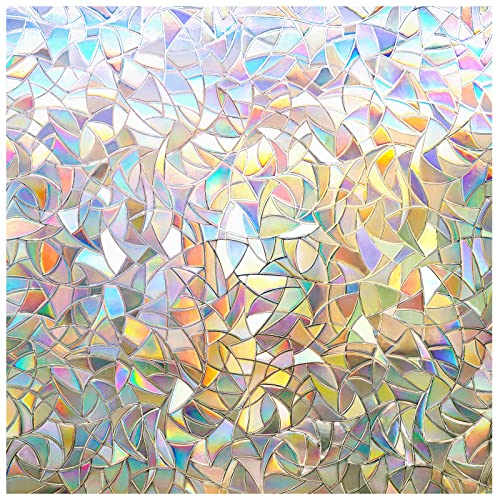
Striking Pattern, Stylish Decoration: With over 10 years of experience in window film innovation, rabbitgoo static film features unique irregular patterns that cast rainbow glows in sunlight, adding a stylish touch to your decor. A cost-effective alternative to bulky curtains, blending durability with everyday elegance
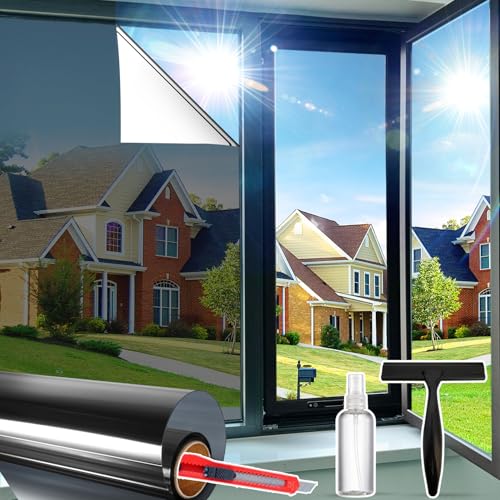
Note: 1. Savvy Choice one way window film provides superb DAYTIME privacy, with a mirror effect looking in from outside when the light is stronger outside than inside. However, when inside light is stronger than outside (for example, at nighttime or when it's very cloudy), the mirror effect disappears and you can see in from outside. Remember to draw the curtains at night for privacy. 2. The free tools are inside of the paper tube.
Can People See Through One-Way Window Film at Night?
At night, people can see through one-way window film if interior lights are on. During the day, the film provides privacy because the external side reflects light better than the inside, creating a mirror effect. But once interior lights are switched on at night, the light balance reverses. The side with more brightness becomes transparent, allowing outsiders to see inside clearly. This is due to the physics of light and reflection—when the interior is brighter, the film cannot block the view. To maintain privacy at night, you need to dim your interior lights or add exterior lighting that keeps the outside darker. Without these measures, your home’s interior becomes visible through the film. Standard reflective or one-way films are marketed for daytime privacy only because they do not work effectively in low-light conditions. This is similar to how fluorescent bulbs can lose their reflective advantage when interior lighting conditions shift, much like the film’s mirror effect fails at night. Achieving the right balance of light is similar to adjusting pleat fullness in curtains to control how much light enters a room.
How to Install One-Way Window Film Without Losing Your Privacy
To install one-way window film successfully, you need to follow precise steps to ensure your privacy is maintained. First, measure your window carefully, adding about one inch to each side of your measurements. This excess allows for easier trimming and adjustment during installation. Next, clean the glass thoroughly using a glass cleaner to remove dirt and grease, which helps the film adhere properly and prevents bubbles.
Prepare a spraying solution by mixing one teaspoon of baby shampoo into a gallon of water. Spray this onto the glass generously to create a wet surface that allows for smooth positioning of the film. Peel off the backing from the film’s adhesive side, then spray it with the same shampoo solution before placing it onto the wet glass. Starting from the top of the window, carefully position the film, then use a squeegee to press from the center outward. This technique forces out air bubbles and excess water, creating a smooth, even surface, and the film also enhances energy efficiency by reflecting the sun’s rays.
Once positioned, trim the excess film with a sharp razor blade, ensuring a clean edge. Press down firmly on the edges to secure the film in place. Within 30 minutes, the film will begin sticking, and a full cure should occur within four to eight days. During this curing time, the film reaches its maximum adhesion and durability, ensuring your privacy remains secure over the long term.

【UV Protection】Continuous exposure to the sun will cause high room temperature, aging furniture, and sunburn on the skin. Sun blocking window film that can block 99% of UV and 80% of IR.It can perfectly solve this problem, and you will have a feeling of visibly cooler after use. It can also save your air-conditioning electricity bill. The free tools are inside of the paper tube
Note: 1. Dwersty one way window film provides superb DAYTIME privacy, with a mirror effect looking in from outside when the light is stronger outside than inside. However, when inside light is stronger than outside (for example, at nighttime or when it's very cloudy), the mirror effect disappears and you can see in from outside. Remember to draw the curtains at night for privacy. 2. The free tools are inside of the paper tube.
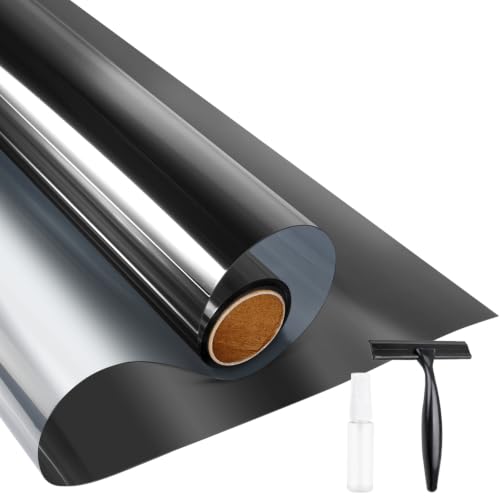
UV BLOCKING & GLARE CONTROL: KESPEN sun blocking window film can effectively block 82% of infrared rays and 90% of UV rays which may hurt your skin, prevent your precious furniture and interior decorations from fading. 12% VLT means that some visible light can enter the room, not only to block the harsh light and reduce glare, but also to maintain your good view
5 Installation Mistakes That Ruin Your One-Way Film (And How to Fix Them)
Even a flawless film can fail if you overlook the basics, but knowing what trips most people up saves you the headache. First, don’t skip glass prep. Using ammonia cleaners leaves a residue that can interfere with adhesion. Instead, use a mild soap, rinse thoroughly, and dry completely before applying the film. Second, install only when the temperature is between 15°C and 25°C. High humidity or direct sunlight can cause the film to stretch, lift, or not stick properly. Third, measure the visible glass and not the frame; cut the film with a 1 to 2 cm allowance using a sharp blade. Precision here prevents bubbles and creases later. Fourth, squeegee from the center outward applying even pressure. This technique helps banish air bubbles and ensures a smooth finish. Fifth, never touch the adhesive side of the film. Oils from your fingers will compromise bonding. If you’re working in challenging conditions, consider using alternative adhesive types that suit your climate. For outdoor installations, shield the glass from wind and dust during curing to avoid debris getting trapped under the film.

Complete Window Privacy Film Kit: 3-piece tool set includes a suede squeegee, a lockable utility knife and a 120ml spray bottle, everything needed to install window film with no extra tools to buy

Window Film Kit --Window film tubes contain all the tools you need to install, saving money and time to make installation easier.

Year-Round Energy Efficiency: Our advanced 87% infrared blocking tech insulates heat in summer and retains warmth in winter, keeping your indoor temperature comfortable all year long. Cut down on heating and cooling costs with this heat-blocking window tint—stay cool, stay warm, and save smart
How to Clean and Maintain One-Way Film Without Damaging It
To clean your one-way film safely, avoid ammonia-based cleaners like Windex and abrasive tools such as paper towels, as they can cause damage. Instead, opt for an ammonia-free glass cleaner or a diluted mixture of mild dish soap and water. Spray this solution onto a soft microfiber cloth, not directly on the film, to prevent water from seeping behind or lifting the film. Gently wipe in the direction of the edges or seams to maintain adhesion and avoid lifting. Manufacturers recommend ammonia-free products for cleaning film.
Use a soft rubber squeegee to dry the film, moving carefully to prevent scratches. Never scrub or press hard, as excessive force can damage the film’s surface. Maintain regular cleaning but wait 30 to 60 days after installation before the first wash to allow the film to cure. Always dry thoroughly to prevent water spots and check your cloths for grit beforehand to avoid scratches. Proper technique and gentle handling help keep your one-way film clear, streak-free, and intact over time.