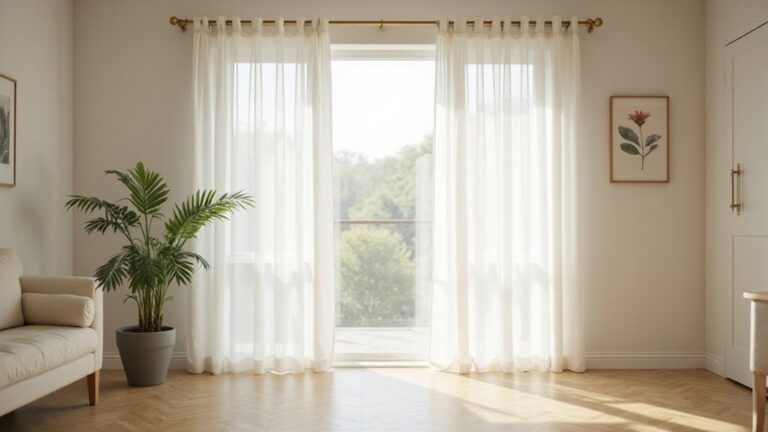
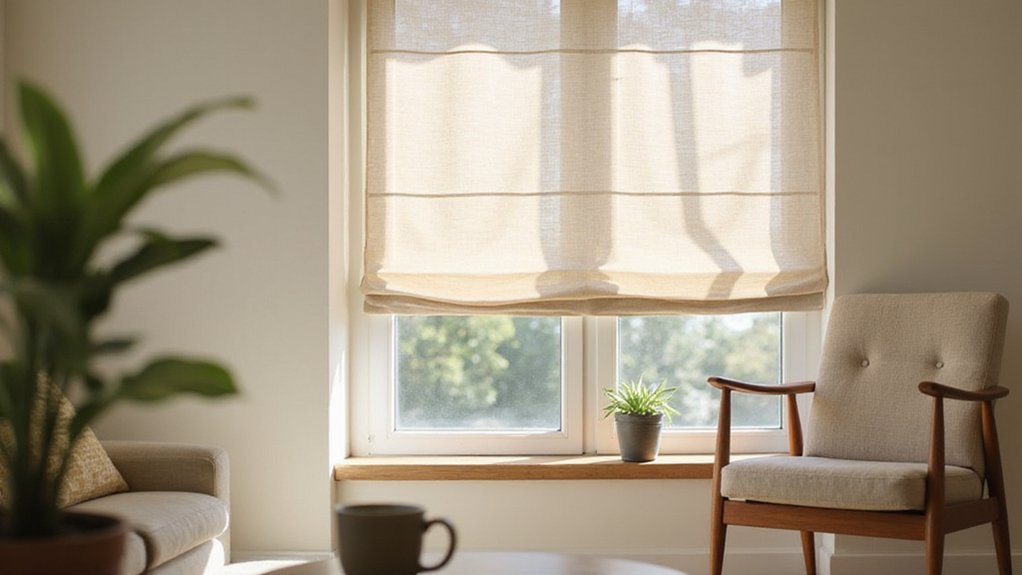
Struggling to find window treatment options that balance style and function? Roman shades might just be what you’re looking for. They offer a sleek, fabric-covered look that easily raises and lowers, giving you control over light and privacy.
Read on to discover how these versatile shades can elevate your space with their charm and practicality.
How Roman Shades Operate and Why They’re Different
Roman shades operate vertically by raising and lowering a single fabric panel through a cord, chain, or motorized mechanism. Unlike standard blinds that tilt slats horizontally or curtains that slide side to side, these shades function as a hybrid of soft drapery and efficient window coverage. Their design traces back to ancient Rome, where fabric panels offered flexible light control well before modern blinds existed. For long-lasting performance, choosing durable fabric is essential; high-quality materials resist sagging and fraying caused by repeated folding. They combine the beauty and softness of drapery with the operation of custom shades. When it comes time to replace or clean the shade, you can apply a gentle heat source to loosen old adhesive residue left by window film. Selecting the right curtain rings ensures the fabric moves smoothly without snagging.
The shade uses rings sewn onto the back of the fabric, which guide strings as you lift or lower it. This system creates crisp, evenly spaced pleats when raised. When fully raised, the fabric stacks neatly at the top, providing an unobstructed view through the window. You have options such as cordless models for enhanced safety or motorized systems that operate effortlessly at the push of a button. For a secure and straightforward installation, you can follow step-by-step instructions similar to those used for hanging closet wire shelves.
The 4 Most Popular Roman Shade Fold Styles Compared
Roman shade fold styles vary in appearance and functionality. Among the four popular options—Flat, Hobbled, Relaxed, and Pleated—each creates a distinct look and offers different benefits. Flat folds are slim and sleek, making them ideal for modern or minimalist spaces and shallow windows. They maintain a clean line when lowered but may require manual adjustments to keep the bottom straight. Hobbled folds produce soft, billowy loops even when fully lowered, adding a layer of texture that helps block more light and enhances privacy, especially in traditional or cozy interiors. However, they tend to bulk up at the top, which can be noticeable in smaller or more formal rooms. Relaxed folds feature gentle, curved edges, giving a casual, breezy vibe that works well in farmhouse or coastal styles without adding extra volume. Pleated folds are characterized by crisp, uniform horizontal pleats that lend a formal, structured appearance. This style is especially suited for tall, elegant windows and can introduce a lush, textured effect that elevates the space. When selecting a fold style, consider how fabric durability and ease of installation come into play; simple folds like Flat are easier on materials and simpler to mount, making them a practical choice for many users. For mounting, consider using a wall sconce nearby to complement the window treatment with ambient lighting. Unlike this window treatment choice, the decision between a vanity or desk involves weighing style, cost, and function to determine the perfect fit for your space. If window treatments develop LED bulb flickering, it may be caused by incompatible dimmer switches or loose wiring, which can often be resolved by checking connections or replacing the dimmer.

CORDLESS & MAGNETIC DESIGN: Featuring a cordless magnetic lift system, this roman shade offers easy, smooth operation with enhanced safety. Effortlessly adjust the shade to your desired height. Secure magnets and lightweight linen fabric hold it firmly in place, allowing you complete control over light and privacy with flexibility and stability.

100% Blackout Technology: Experience the ultimate darkness and tranquility with our Peacock Roman Shades, featuring advanced 100% blackout technology that effortlessly transforms your indoor space into a serene sanctuary

No Drill Blinds: LazBlinds patented technology No Tools-No Drill system allow it no need to drill any holes on your window frame, great for Renter, Landlord, and Home Buyer. Easy to Install in 30 seconds with no tools-no drill, screws, or brackets. And it can afford maximum 30kg. Fit All Kinds of Walls, like woodiness metope, tile marble, concrete wall and rough tile.
Choose Between Corded, Cordless, and Motorized Roman Shades
Choose cordless or motorized Roman shades for safety, as corded shades are being phased out due to child strangulation risks. Cordless shades feature an internal clutch mechanism that allows you to push up the shade firmly to raise it, eliminating exposed cords. Motorized shades operate via remote or voice command and are especially useful for hard-to-reach windows. Both options enhance safety and reduce hazards in homes with children or pets.
When deciding between them, consider your budget and desired style. Corded shades tend to be more affordable but require careful fabric selection to ensure durability. Cordless shades provide a sleek, clutter-free look, especially when wall-mounted, offering a polished finish. Motorized models have a higher upfront cost but deliver convenience and integrate easily into smart home systems. If safety and modern aesthetics are priorities, avoid corded options and opt for cordless or motorized shades based on your control preferences.
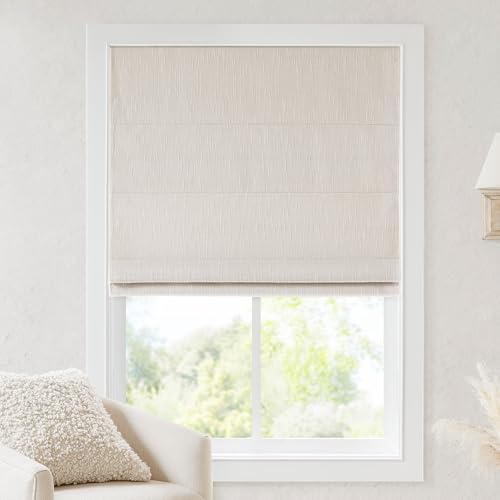
True to size - Refer to our sizing guide image for your perfect fit. SIZE: 34"W x 64"L. Inside mount requires shade 0.5" shorter in width, while outside mount requires shade 3" wider than your window size

Inside Mount ONLY. For better internal installation, a standard 1/4 inch deduction is made to the shade width. The actual blind size is 34 1/4" W × 60" H, the unique spring rod can extend 1 inch in total, allow the blind to fit for window width 34.35 - 35.25 inch, blind height can adjust from 0" to 60". (Pls Note) Minimum 1 1/5" depth of window frame required for inside mount.

1【Our Strengths】Over 100 Years Window Covering Expertise (SCHOENBERGER GROUP est.1878)
Blackout, Thermal, and Light-Filtering: Which Roman Shade Liner Is Right for You?
A light-filtering liner is ideal if you want soft, balanced natural light in your room. It’s made from a 90 gsm white fabric that allows between 60% and 80% of sunlight to pass through. This makes it perfect for living areas or spaces where you want to maintain a bright, airy atmosphere without direct glare. The visible texture of the fabric also helps coordinate with your decor by providing a subtle, textured look. This process involves basic DIY tools like a screwdriver and ladder to access and swap the fixture safely. For maximum light blockage, the beige lining blocks 85-95% light, while the white lining blocks 45-55% light.

【2-in-1 Day and Night Roman Shades】: Transform your home with the SLKWDOBD 2-in-1 Day and Night Roman Shades. These blackout and light filtering Roman shades offer versatile light control, making them perfect for any room. Adjust the shades to block out light for a restful sleep at night or allow soft, filtered light during the day. Perfect for modern, minimalist homes, these double Roman shades combine style and functionality to suit your needs at any time of the day.

【For inside mount】order the exact width of your window frame. If your frame is 34", buy 34". No deduction – we make it to your exact size

PRIVACY + LIGHT FILTERING (NOT BLACKOUT) – Softens sunlight and provides daytime privacy. At night with interior lights on, silhouettes may be visible (common for light-filtering shades).
Where Roman Shades Perform Best in Your Home
Roman shades work best in dining rooms when paired with neutral or darker fabric tones and layered with curtains. This approach creates an elegant, sophisticated look that balances softness with structure. These shades are compact and space-efficient, making them ideal for intimate dining areas where you want a tailored appearance without overwhelming the room’s proportions. Their clean lines and ability to seamlessly blend with various décor styles add a polished touch, elevating your dining space’s overall aesthetic. For homeowners seeking additional light control and privacy, tinted window film can be applied directly to the glass beneath the shades to reduce glare and UV exposure without altering the fabric’s design. For those prioritizing high-quality performance, selecting a night light with adjustable brightness and a durable build ensures consistent illumination throughout the evening. To save on costs while personalizing your setup, consider using budget-friendly materials like plywood or MDF for custom closet dividers that can be finished to match your existing décor.
Roman Shade Costs: What $100 vs. $500 Gets You
A $100 Roman shade usually means a basic, ready-made model from a chain store. These options often come with limited fabric choices and manual controls, making customization difficult. You get standard colors that may not match your room’s palette, and the materials are generally less durable. Installation is straightforward but basic, often requiring no professional help. While affordable, these shades might not hold their shape well over time or operate as smoothly as higher-end ones.
In contrast, spending around $500 gets you a custom or high-end Roman shade designed with premium fabrics, intricate folds, and professional installation. The materials are carefully selected for durability and aesthetic appeal, often including linings or blackout options that enhance functionality. Custom fabrics allow you to match colors perfectly with your existing décor, turning your window into a true focal point. The construction is more labor-intensive, ensuring the shade maintains its shape and operates smoothly for years. The investment not only improves the look but also the longevity and ease of use.

Material and Color Options: Crafted from premium 100% linen fabric, available in a wide array of colors to suit any room decor; offers a luxurious and natural look

【For inside mount】order the exact width of your window frame. If your frame is 30", buy 30". No deduction – we make it to your exact size

Material and Color Options: Crafted from premium 100% linen fabric, available in a wide array of colors to suit any room decor; offers a luxurious and natural look
Roman Shade Light Gaps and Size Limitations to Know
Roman shades can have light gaps and size limitations. Expect about a ½ to 1 inch gap per side when the shade is installed inside the window frame. This gap allows for smooth operation but can let in light, preventing complete darkness even with blackout fabric. To eliminate side gaps, opt for an outside mount that overlaps the window frame, blocking light from entering around the edges. For the top gap, install the fabric so it extends slightly off the back of the dustcap, flush with the wall, to seal at the top. For those seeking superior light control, window film you can see out is another option to consider for glass surfaces, reducing glare without adding fabric gaps. For a more budget-friendly alternative, a DIY approach can save money by using custom materials to address specific window dimensions. If you are comfortable with minor electrical work, you could even consider cutting battery-operated fairy lights to add custom illumination without hardwiring.
Heavier, lined fabrics can help reduce light leakage and resist sagging over time. However, keep in mind size restrictions: shades should not exceed 72 inches in width or height. Larger shades become too heavy, putting strain on both the fabric and the lift mechanism. If you need to cover bigger windows, consider pairing your shade with blackout curtains or adding vinyl gap blockers to seal remaining leaks. Layering blackout draperies provides effective coverage by overlapping vinyl strips to hide larger gaps.
How to Match Roman Shade Fabric to Your Decor Style
Choosing the right fabric for your Roman shades depends on matching weight, texture, and color with your decor style. For flat or cascade styles, stiff fabrics like cotton or heavyweight linen work best to keep crisp folds and clean lines. Relaxed or tulip shades benefit from lighter, pliable materials such as sheer linen, which create gentle, flowing curves. Consider fabric durability, especially in moisture-prone areas like kitchens or bathrooms, by selecting moisture-resistant synthetics. To add visual interest and complement your decor, experiment with pattern contrast—pair a solid shade with bold drapes or opt for subtle geometric patterns for a modern vibe. Always coordinate the shade’s color with your wall paint; navy pairs beautifully with white, while muted yellows harmonize with soft gray. Lastly, ensure the pattern and fabric style align with your overall decor to avoid overwhelming busy rooms. Incorporating a dimmer switch allows you to adjust light levels, enhancing the ambiance created by your chosen shade fabric.

CORDLESS MAGNETIC & NO-DRILL DESIGN: Our upgraded Roman shades feature a hassle-free, no-drill installation with ultra-strong sticky velcro that securely holds the shade without damaging your walls. The ingenious cordless magnetic folding system ensures silky-smooth operation while completely eliminating dangerous dangling cords, providing ultimate safety for homes with children and pets, and giving you total peace of mind.

PACKAGE INCLUDES: 1-piece tie up curtain. Made of linen texture fabric. Extremely soft to touch., imported.

Size instructions and inside mount only: No Drill Roman Shades sizes displayed on the page are the actual shade size you will receive. There are tension rods on both sides of top rail, please measure your window size carefully, and your window width should be 3/8-1/2 inches wider than the shade width for perfect fit. So this 24 inches wide 50 inches high roman shades fit for window width 24 3/8 - 24 1/2 inches, window height should be less than 50 inches. Please Note: Minimum 2" depth of window frame required, so this no drill roman shade may not fit for doors.
Roman Shade Maintenance: How to Clean and Extend Lifespan
Regular cleaning is key to prolonging the life of your Roman shades. Aim to dust weekly using a soft cloth or microfiber duster. For a quicker refresh, vacuum the folds on low suction or use a lint roller to pick up dust and pet hair. When choosing fabric, consider your cleaning method: delicate materials like silk or linen require professional dry cleaning, while sturdy fabrics such as cotton can be gently hand washed with mild detergent. To prevent damage, use support behind fabric during vacuuming. When selecting shades, consider how their style and function align with your room’s decor. For fabric roller shades, a similar approach includes vacuuming with a brush to gently remove embedded dust. If you are installing these yourself, DIY curtain rod brackets can be a budget-friendly alternative to store-bought hardware.
To address stains, blot immediately with a damp cloth to prevent setting. Then, dab with a mixture of water and mild soap, avoiding vigorous scrubbing that can damage the fabric. Always test any cleaning solution on a hidden patch first to ensure it won’t cause discoloration. After cleaning, air dry your shades flat in a shaded area to prevent warping or fading from direct sunlight.
Avoid machine washing unless specified by the manufacturer. Regular inspections of cords are also crucial—check for fraying or damage and replace if needed. Deep cleaning your shades at least once a year helps keep them looking new and prevents build-up of dirt and dust, thereby extending their lifespan.