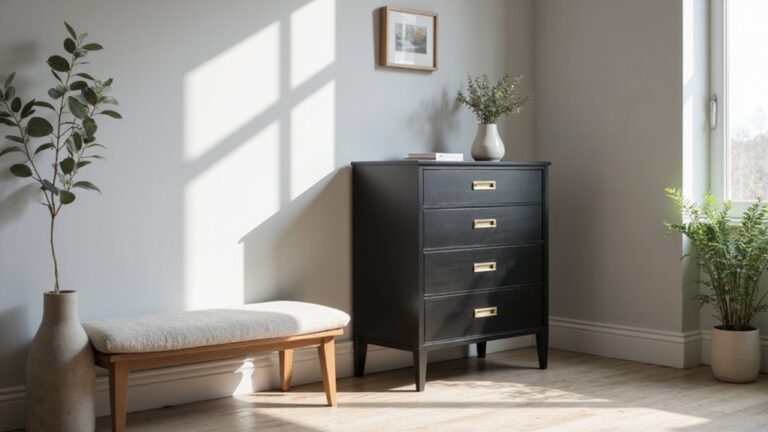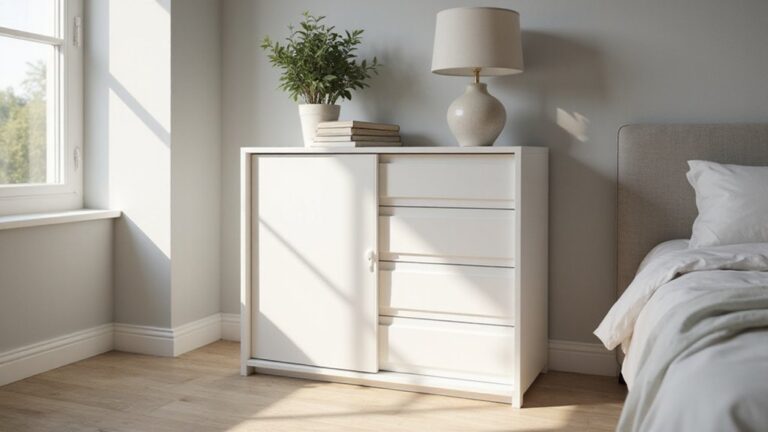
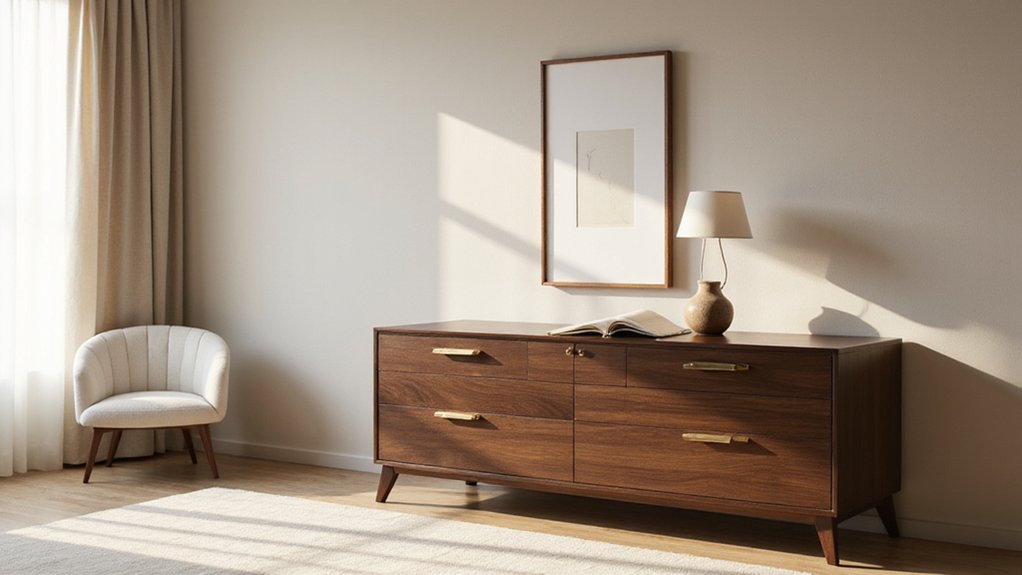
If you’re trying to decide between a chest of drawers or a dresser for your space, the key difference is in their shape and how you use them.
A dresser is wider and lower, offering more surface area for a vanity or decor.
Meanwhile, a chest is taller and narrower, making it better for fitting into tight corners.
Understanding these distinctions will help you pick the right piece for your room’s needs.
The details follow below.
Chest vs. Dresser: What’s the One Key Difference?
The key difference is in their shape and orientation. Dressers are typically wide, low-profile units with a horizontal layout, making them suitable for placing across from a mirror or for added surface space. Chests of drawers are taller and narrower, designed to maximize vertical storage without occupying much floor space. This orientation affects how you use each piece: a chest’s slim, stacked drawers fit into tight corners or small bedrooms, while a dresser’s broad surface can hold decorative items or serve as a workspace. Material options and style choices vary for both, including solid woods like oak or walnut and modern veneers, with styles ranging from sleek minimalism to ornate traditional designs. For those seeking to save floor area while adding storage, a chest of drawers offers a vertical storage solution that is ideal for small spaces. The main difference ultimately influences how each piece fits into your room—one reaching upward, the other stretching outward. When considering a dresser, its horizontal design provides a broad surface for lamps, mirrors, or daily essentials, similar to how a table can offer both storage and display functions. If you are weighing similar furniture choices, a vanity or desk decision can also hinge on whether you prioritize surface area or specialized storage.
Chest vs. Dresser: How Their Heights and Widths Compare
Chests of drawers are generally taller than dressers, typically standing between 44 and 60 inches high. This height brings them to your chest or shoulder level, making them ideal for maximizing wall space in narrow rooms. In contrast, dressers usually sit at a waist-high 30 to 40 inches, providing a lower profile that requires more floor space but offers a broader surface area. For those prioritizing energy-efficient illumination, a night light can also be a valuable addition to a dresser’s top surface.
Width-wise, dressers tend to be wider, extending from 30 to 70 inches, which allows for more storage and surface area but also takes up additional room. Chests are narrower, measuring around 24 to 38 inches wide, helping to save approximately 4 square feet of walking space. This makes chests especially suited for smaller bedrooms or tight spaces, while dressers, needing from 9 to 12 square feet of floor space, are better suited for larger rooms.
Regarding design, both tend to have similar material durability, but their styles differ: chests present a tall, column-like silhouette, promoting vertical space efficiency, whereas dressers feature a low, wide profile that is easier to place mirrors upon and can complement a more open layout.
Chest vs. Dresser Drawer Count: Why Dressers Vary More
Dressers generally have more drawers than chests, with counts ranging from six to nine. This variation comes from their design, which often includes multiple rows of shorter and longer drawers, offering more drawer organization options for small items like accessories and keepsakes. Dressers achieve this higher count with shallower, longer drawers, allowing for better organization across horizontal columns. In contrast, chests tend to have four to six deep, narrow drawers stacked vertically, emphasizing vertical storage. Manufacturer differences mean some dressers may have as few as four drawers, while others reach nine, providing a wider array of decorative and functional options. In terms of capacity, a standard six-drawer dresser holds about 12 to 15 cubic feet of space, compared to an 8 to 10 cubic feet capacity in typical chests. Similar electrical issues in your home, such as LED bulb flickering, can often be traced back to loose connections or incompatible dimmer switches that disrupt consistent power flow.
Surface Space: Do You Need a Vanity or Just Storage?
A dresser is ideal if you need a functional vanity top. Typically 30 to 40 inches tall, its waist-height surface is perfect for applying makeup, arranging jewelry, or mounting a mirror without wall installation. The wide top allows you to spread out personal care items comfortably. In contrast, a chest of drawers stands 44 to 60 inches tall, requiring you to reach upward, which can be inconvenient for daily use as a vanity. Its limited surface area is better suited for small decor items rather than makeup or grooming essentials. When selecting between the two, consider the material—solid wood offers durability, while engineered options are budget-friendly. Ensure the color matches your room’s palette for a cohesive look. Keep in mind that dressers need approximately nine square feet of floor space, so verify your room can accommodate both the storage and surface needs. For larger spaces, a closet or wardrobe provides more hanging storage and may better complement your functional and style goals. For similar tips on fabric selection, choosing a quality velvet curtain can add a luxurious touch while aligning with your room’s color and texture goals.

【Complete Protection】These crystal-clear and waterproof plastic table covers protect your tables, desks, tablecloths, hard floors and furniture tops from scratches, abrasions, stains, spills and damage while still preserving your furniture tops' natural beauty

FRENCH COUNTRY ELEGANCE - Transform your bedroom retreat with an antiqued two-tone aesthetic that blends a chipped white base and distressed wood finished top for added pastoral charm

Complete Protection: Clear and waterproof pvc table cover protect your tables, desks, tablecloths and furniture tops from scratches, abrasions, stains, spills etc. Tip: For best performance, optical mice should be used with a mouse pad.
Which Fits Your Room? How to Choose by Space
For rooms under 12 by 12 feet, a chest of drawers is your best choice. Its vertical design, typically standing 44 to 60 inches tall and only 24 to 38 inches wide, allows it to fit into narrow corners without taking up too much floor space. This maximizes storage while keeping the room feeling open. You can choose from many color options to match your decor, and the durable materials ensure your furniture lasts through years of use.
In larger bedrooms, a dresser is more suitable. Its length ranges from 30 to 70 inches, providing ample horizontal surface area that can serve as a vanity or mirror space. Its shallower height, often 35 inches or less, makes it easy to place beneath windows or wall art without blocking light or sightlines. If you want to store a lot without sacrificing surface area for daily activities, a dresser will serve you well.

Durable and Sturdy: Crafted from premium P2 MDF board this tall vertical dresser features a stable base and reinforced top panel for robust stability, supporting up to 150 lbs. Equipped with 2 anti-tip devices for reliable safety

Ample Storage Space: This 5-drawer dresser provides generous storage for clothing, accessories, and household essentials, keeping everything neatly organized. The sturdy wood top offers reliable support for lamps, books, décor, and other daily items

【Excellent Storage Capacity】Bedroom dresser with 5 drawers provides plenty of storage space, which can classify your messy items as your need; The wooden table top with good load-bearing performance provides a hard surface to place lamps, books, decor, and more.
Price Breakdown: What Each Costs and Why
The cost of a dresser generally ranges from $800 to $1,200, making it more expensive than a chest of similar size. The higher price reflects several factors. Material costs are a key driver—solid wood dressers tend to be 15–20% less expensive than those with more elaborate finishes because they use less lumber, hardware, and finishes. Additionally, dressers are usually wider and have deeper drawers, which can push their weight over 200 pounds. This increases production costs due to the heavier materials and larger size. For comparison, when choosing between storage benches and ottomans, style and function also influence cost based on material and construction complexity. Proper recessed lighting placement can similarly affect the cost and complexity of a room installation, as it requires careful planning for spacing and wiring. For a DIY approach, using affordable building tips can significantly reduce the expense of custom storage solutions. Manufacturing complexity also raises the price—dressers require more intricate joinery, reinforced frames, and heavy-duty drawer slides to support multiple columns of drawers. In contrast, chests tend to have a simpler, single-column design with less labor-intensive construction. As a result, dressers typically land in the $800 to $1,200 range, while chests often stay around $600 to $1,000. Although premium materials can narrow the price gap somewhat, dressers still tend to be 10–25% pricier overall.

MODERN, STYLISH NURSERY STORAGE: With six roomy drawers and a clean, versatile design, this piece fits beautifully with any nursery or kids’ room—celebrated for its modern aesthetic and effortless style pairing.

【Rustic Farmhouse Aesthetic】: Elevate your home’s decor with this farmhouse dresser that introduces a cozy, rustic charm to any living space. This antique dresser design features a classic weathered finish, serving as a sophisticated traditional style dresser that acts as a beautiful focal point in your master suite or guest room.

MODERN CHIC APPEARANCE: MALOL storage drawer organizer elevates space with the unique coastline fluted that enhances texture and elegance. The thick tabletop of this bedroom closet dresser features natural grain. Wide metal handles and base legs add a contemporary touch, creating a personalized and distinctive piece
Mirror Attachments: Dressers Yes, Chests No
Dressers are typically built low and wide, usually measuring between 60 and 72 inches in width. This size and shape make them ideal for attaching a mirror, transforming the dresser into a grooming station. The mirror is usually fixed to the top rear edge, providing a stable, waist-level surface that’s convenient for daily routines. Many manufacturers include these mirrors with the dresser as part of a bedroom set, so you often don’t need to shop separately. For a finished look, you can use LED strip lights to illuminate the grooming area, similar to how DIY projects connect them with step-by-step instructions. For a fully organized setup, you can apply easy DIY tips to arrange your clothing within the drawers. Additionally, selecting the right lighting fixture can enhance the overall ambiance of the room.
Material choices for the mirror support are important. The ample width of dressers allows for supporting heavier frames, which means you can choose decorative accents like carved wood or metal inlays without worrying about balance or stability. This makes dressers versatile for personalized decor.
In comparison, chests of drawers are narrow and tall, generally between 30 and 40 inches wide. Their vertical, stable design does not support attached mirrors securely. To compensate, you’ll want to pair chests with separate wall-mounted mirrors to create a complete grooming area. This keeps the focus on vertical storage rather than support for heavy or decorative mirrors.

COMPLETE MOUNTING KIT: Includes 4 x Antique Brass Swivel Mirror Screws. Size: 2.94" x 1.29" (74.7 x 32.7mm). Screw Specs: M8. This mirror mount works as mirror brackets for wall mounting. Please confirm your mirror frame's hole size before purchasing.

**Feather-like crystal patterns sweep across the bust and shoulders** — silver-toned rhinestones in small round and larger teardrop shapes are arranged in stylized, upward-reaching feather or flame patterns over each breast, curving down to meet at the waist and framing a central sheer panel. A built-in necklace of mixed-size crystals circles the neck, with a single line of alternating round and teardrop stones running down the outer edge of each long sleeve.

HomeStock Bedroom Mirror for Wall Mounting or Dresser Attachment, Sand Finish
Chest vs. Dresser: Which Suits Your Wardrobe Best?
A dresser with six to nine wide drawers offers superior capacity and versatile organization for your wardrobe. Its varied sizes accommodate accessories, keepsakes, and bulky items that require more space. The top surface can double as a vanity, making it a practical multipurpose piece. However, it does require more floor space due to its larger footprint. If you need abundant storage and flexibility for different item sizes, a dresser is the best choice. In contrast, a chest provides vertical storage that maximizes volume without taking up more floor area, ideal if space is limited.

Multiple Uses: Our versatile vanity tray keeps spaces tidy effortlessly. It can be used as a bathroom tray, decorative tray, perfume tray, jewelry tray, dresser tray, kitchen tray, serving tray, toilet tank tray, and more. A handy solution for various needs

Larger 13" × 8" Upgraded Size: Designed wider than standard trays, the 13" × 8" surface offers generous space for organizing and displaying essentials. Ideal for perfume bottles, skincare, candles, diffusers, and decorative accents on bathroom vanities or countertops

Convenient to Use: Vanity tray easy access without having to routinely sort through things, and just enough sidewall to keep everything together in one place