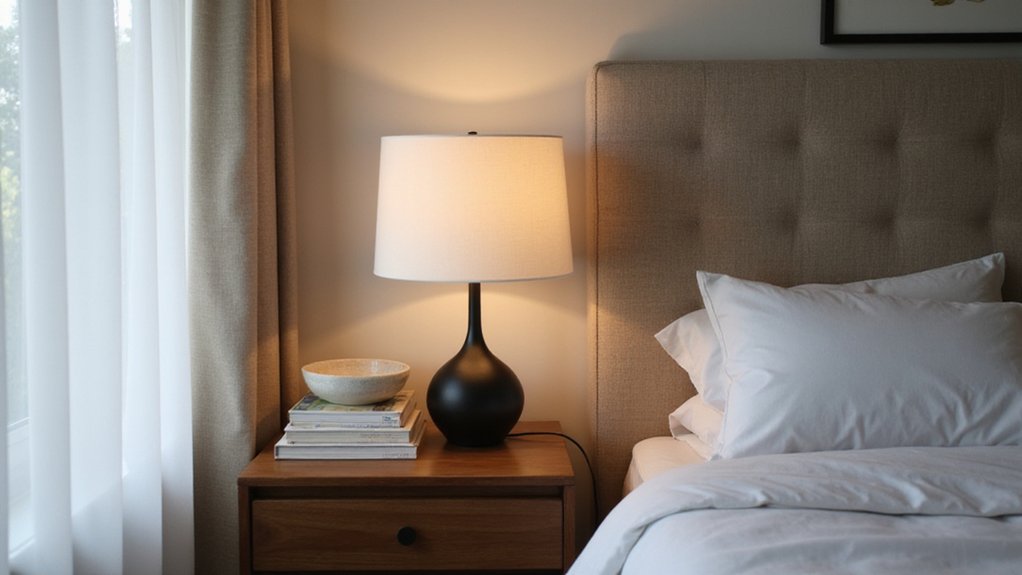
Finding the perfect height for your bedside lamp can make a big difference in your nighttime comfort and eye strain. A common goal is to have the lampshade hit at or just below your chin when you’re seated in bed, which helps prevent glare and makes reading easier.
In this article, you’ll discover how to measure and choose the ideal lamp height for your space.
Why Getting the Height Right Matters
Getting the height right is crucial for your comfort and to reduce eye strain. Position the bulb just below eye level to prevent direct light from hitting your eyes while in bed, which helps eliminate disruptive glare for you and your partner. When the shade’s bottom aligns with chin level, the light will cast directly onto a book, allowing you to read without facial exposure to the glare. Additionally, this proper lamp height enhances reading comfort by maintaining visual balance with the bed and avoiding insufficient lighting. A well-chosen window valance can also complement the bedside lamp’s height by controlling ambient light in the room. If the bulb itself flickers due to a loose connection or incompatible dimmer, even the correct height will not prevent visual discomfort. For optimal task lighting, consider a model with adjustable brightness to mimic the clarity of a high-quality vanity mirror.
Decorative lamp styles and material finishes should not dictate functionality. Instead, let the height influence your choice. A taller lamp with a metal finish won’t solve glare issues if it’s mounted too high. Aim for a proportion where the shade’s top is near seated eye height. This positioning ensures the light illuminates your task area effectively without shining directly into your face, creating a comfortable, sleep-friendly environment. Correct height makes any style work seamlessly.
How to Measure the Perfect Bedside Lamp Height for Your Nightstand
To find the perfect bedside lamp height for your nightstand, measure from your nightstand surface up to your chin or eye level while sitting upright in your normal reading position. This height ensures adequate illumination without causing glare. The bottom of the lampshade should stay below your eye line to avoid straining your eyes while reading or relaxing in bed.
For optimal decor coordination, start by measuring your nightstand height. A standard 24-inch nightstand pairs well with a lamp that is approximately 26 to 27 inches tall. If you prefer a more balanced look or need extra light, you can select a lamp up to 1.2 times taller. Additionally, the bottom of the lamp shade should sit at least 60 centimeters above your mattress to provide sufficient light without obstructing your view. To prevent any harsh shadows, consider positioning the lamp so the shade aligns with your curtain rod placement for a cohesive room layout. Measure the distance from your nightstand to your eye level, then choose a lamp that fits comfortably within this range for both functional and aesthetic success. The lamp base should be chosen to avoid dominating the nightstand, ensuring visual balance and stability with the surrounding furniture. You could even repurpose a DIY storage project to hold your lamp accessories neatly beside the bed. When considering a larger desk, these same height principles can apply, but a vanity versus desk comparison helps determine the best lighting for your primary workspace.

Customize Your Lighting in Seconds: Imagine You’re settling into your favorite chair, and with just a quick button press, you can set the perfect mood. Our small bedside lamp offers three color temperatures—warm (3000K), neutral (4000K), and cool (6000K)—so you can easily switch between cozy, balanced, and bright lighting to match your activity or vibe. (Pro tip: Press the switch button twice to cycle through the colors!)

【Resin Stone Design】Table Lamps is 26 inches tall, featuring a handcrafted resin body that authentically replicates the natural texture of travertine stone—from the rugged surface to the fine pores. Its substantial presence adds a bold, sophisticated look to any space. But the resin material of this Beside Lmaps makes it remarkably lighter than real stone, so moving, repositioning, and cleaning are effortless. You get the premium visual appeal of natural stone without the heavyweight hassle—offering an affordable luxury touch for everyday living.

Height Adjustable Modern Table Lamps: Experience the perfect blend of style and functionality with Kondras set of 2 flexible table lamps for bedroom. These modern adjustable nightstand lamp sets feature a height adjustable design, allowing you to easily customize the height in your space. With a height range of 23" to 30", our tall skinny table lamp are ideal for bedrooms, living rooms, kids' rooms, offices
3 Quick Measurements to Match Your Lamp to Your Mattress
The ideal lamp height depends on your mattress and nightstand setup. First, check if your nightstand aligns with the top of your mattress. If it does, select a lamp that is 24 to 30 inches tall from base to shade top. This height adds about 2 to 3 inches above the nightstand, creating proper proportion and balance. Your lamp should be approximately one-third of your nightstand’s width to achieve a harmonious look. If you plan to modify your lamp’s wiring, consider following cutting best practices to avoid damaging the cord.
If your nightstand sits lower than your mattress, opt for a taller lamp to compensate for the height difference. Conversely, if it’s higher than your mattress, choose a shorter lamp. The total height from the floor to the top of your lamp should fall between 58 and 64 inches. Ensure that your lighting fixture matches the scale of your room and coordinate its color with your bedding and headboard for a cohesive appearance. These measurements help you select a lamp that complements your mattress height seamlessly. For a similar approach to achieving darkness in a room, you could consider the principles behind top blackout roller blinds for windows. For instance, applying a one-way privacy film can enhance your bedroom’s comfort by blocking outside views during the day.
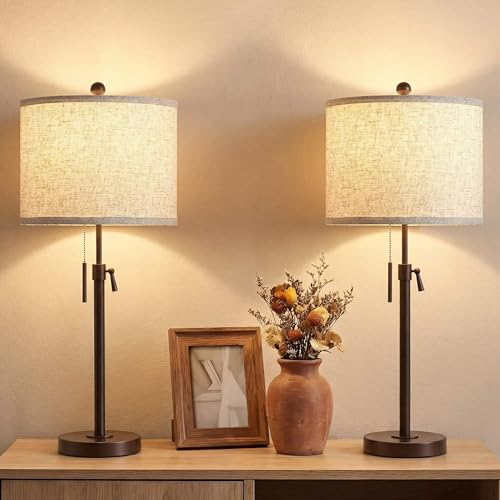
Versatile Height & Solid Stability: The QINGMIAO table lamps set of 2 offers an adjustable height from 22" to 30", effortlessly adapting to various table heights and lighting needs throughout your home. Anchored by a heavy, premium metal base, these lamps provide exceptional stability to prevent tipping, even in busy households. For added care, each base is finished with a protective bottom pad to ensure your furniture remains scratch-free, while the elegant lampshade creates a soft glow in any space

22-30 Inches Adjustable Height Table Lamp: This modern tall table lamp features a flexible height adjustment design that can be easily modified from 22 to 30 inches to fit various furniture and lighting needs; equipped with a 12*10*9 inch classic conical lampshade and a stable 6-inch diameter solid metal base with non-slip silent padding, these brushed nickel matte finish tapered table lamps deliver excellent stability, effectively preventing tilting or shaking for safe and daily use
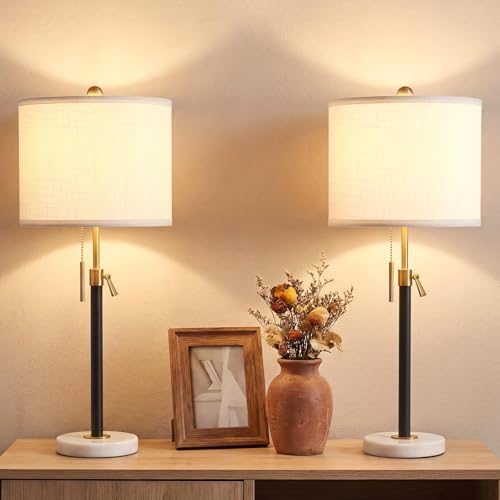
Versatile Height & Solid Stability: The QINGMIAO table lamps set of 2 offers an adjustable height from 22" to 30", effortlessly adapting to various table heights and lighting needs throughout your home. Anchored by a heavy, authentic marble base, these lamps provide exceptional stability to prevent tipping, even in busy households. For added care, each base is finished with a protective bottom pad to ensure your furniture remains scratch-free, while the elegant lampshade creates a soft glow in any space
Where Should the Bottom of the Lampshade Hit When You’re in Bed?
The bottom of your lampshade should hit at or just below your eye level when you’re in bed. This positioning prevents glare and provides comfortable illumination for reading or relaxing. If you lean against your headboard, aim for the shade bottom to be roughly at your chin height. To find the ideal spot, sit up normally and measure from your nightstand to your chin. That measurement guides where the shade’s bottom should rest to project light downward onto your book or phone without casting shadows or shining directly into your eyes. Consider pairing your lamp with kitchen curtain picks for unified window style ideas. You can build a custom bedside lamp using bench storage materials for a budget-friendly and functional nightstand solution.
Keep the shade no higher than your eye level to avoid direct light into your eyes. When adjusting, consider decorative accents on the lamp; they should not hinder functionality. Additionally, coordinate the color and style of your lampshade with your nightstand and bedroom decor to create a cohesive look. While shoulder-height placement can work for general ambiance, chin or eye level positioning is best for reading. Find that sweet spot, and you’ll eliminate eye strain instantly. DIY window film costs significantly less than professional installation, offering a similar budget-friendly approach to customizing your lighting setup.
What Size Lampshade Works Best for Bedside Use?
A lampshade that fits well for bedside use should be approximately two-thirds the height of your lamp’s base. For example, if your base measures 30 centimeters, choose a shade around 20 centimeters tall. This proportion ensures the shade looks balanced and prevents it from overpowering the nightstand or blocking access.
In terms of width, double the diameter of your lamp’s base. If your base is 10 inches in diameter, select a shade about 20 inches wide. The widest part of the shade should be at least half an inch wider than the base on each side to create a pleasing, proportional look. However, make sure the shade does not spill over the edges of your nightstand, avoiding any obstruction or risk of knocking it over.
Shape also influences light distribution: rectangular shades suit more linear bases, while drum styles offer balanced illumination. Color-wise, opaque shades help direct light downward, reducing glare for reading, whereas textured or softer materials create an even, cozy glow. For slender bases, aligning the shade diameter closely with the height can help maintain visual harmony and prevent a top-heavy appearance. To effectively set the ambient light mood in the room, matching the shade material to your desired atmosphere is essential. When selecting a shade, consider the light distribution patterns of different shapes to ensure they match your reading or relaxation needs. For a truly budget-friendly approach, you can use DIY closet shelf materials to construct a custom lamp base that perfectly complements your shade.
To ensure the shade hides the mounting hardware and socket wiring, verify that its bottom comes close to the lamp base, about an inch, without obscuring the lamp’s shape.
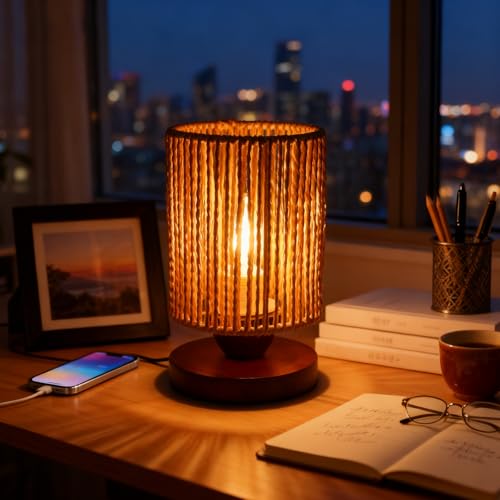
Handcrafted Natural Rattan Texture - This bohemian-style rattan lamp is meticulously woven by hand from premium, durable rattan, preserving its original grain and color for an eco-friendly, renewable appeal. As a table lamp, it filters soft light through the woven shade's gaps, creating dappled shadows that evoke a warm, hazy, and serene atmosphere—perfect for illuminating bedroom or living room nightstands, making late-night reading feel utterly inviting.

Lamp Shade Dimension: Top diameter:10'', bottom diameter:10'', height:13'', screw thread diameter: 0.43''. Large size suits most table lamps and floor lamps, wall lamps with lamp harb,Please check the shade size carefully to make sure they are suitable for your light fixtures before purchasing

Unique size design: Top: 8.7 inches, bottom 8.7 inches, height 8.8 inches, screw thread: 1.65 inches (we have adapters suitable for various lighting fixtures), drum lamp shade can be perfectly matched with a variety of lamps, lampshade can be easily integrated, adding a unique charm to your home lighting.
How to Position the Switch for Easy Reach From Bed
Mount bedside switches between 39 and 43 inches from the floor to ensure easy reach from your bed. This height aligns with the average arm’s reach of 21 to 28 inches for most adults, making the switch accessible without shifting. Keep the switch 30 to 40 centimeters from the bed’s center, matching the typical distance of your nightstand. Positioning it here ensures you can easily operate controls even when you’re half-asleep. Avoid placing the switch behind a door or too high on the wall, as that makes it difficult to find in darkness. Instead, install it on the wall near the bed’s edge for quick access. For ease in low light, select a touch or pull-chain switch rather than fumbling for the lamp switch inside a lampshade. If you prefer remote control, consider smart bulbs compatible with apps or voice commands, removing the need for physical reach altogether. Always test the height with your arm extended before drilling to confirm it suits your reach. This way, you can effortlessly control your lighting from your pillow. For a similar installation, turning off the power at the breaker is a critical first step before any wiring adjustments. If you prefer a more decorative option, choosing a lava lamp can add both ambient glow and visual interest to your nightstand. For optimal storage of bedside accessories, consider a closet organizer with drawers to keep remotes and switches tidy near your bed.

Modern Design: Modern home decor, wall mount light fixture with LED light source, slim switches and in Flexible swivel arm, the whole lamp body in metal, which is very easy for cleaning, Small and minimalist design will not take up much space for bedside

【Professional Eye-Caring Wall Lamp】Wall-mounted reading light with 14 premium SMD2835 LEDs delivers 3000K-6000K adjustable color temperatures, eliminating glare and flicker for bedtime reading. 10 dimming modes (10%-100%) adapt to late-night sessions while keeping bedrooms dark. Flexible 360° gooseneck focuses a 60° beam precisely on books without disturbing partners. Includes screw/tape mounting for headboards or walls.
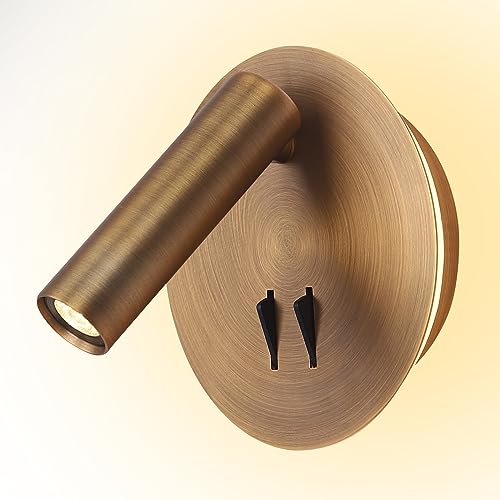
Reading lamp & Night light: 3W spotlight is wonderful for bedroom reading, and 6W round backlight is useful mood light for night. And two lights are controlled by two separately switches, It can give you dual request of lighting on bed, the convenient reading and soft mood light.
The Bedside Lamp Height Rule for Eye-Level Reading
To ensure comfortable eye-level reading, position your bedside lamp so that the lampshade’s bottom is at or just below your seated eye level, typically between 48 and 54 inches from the floor. This height prevents glare and directs light onto your book without causing discomfort or obstruction. Measure your nightstand height and sit upright in bed; your lamp’s total height should fall between 24 and 30 inches, with an ideal range of 26 to 30 inches for optimal reading comfort. This placement not only complements your room’s color scheme and ambient lighting but also creates a balanced, functional setup that minimizes eye strain during long reading sessions. To keep your lamp stable on the nightstand, ensure the base is firmly positioned and consider using curtain rod brackets to neatly anchor any nearby cords or accessories. For securely positioning your lamp, consider using top picture hangars to perfectly display your photos and maintain your ideal bedside arrangement.

Simple Sense with Compact Design: Pairing subtle contemporary inspiration with slender silhouette and hardback drum shade, this collection will bring a sense of mid-century charm to your living space. Using practical cantilever design, our bedside table lamp can offer a perfect sized lampshade with small footprint on the tabletop to you.

Premium Rustic Farmhouse Styling & Eye-Protecting Lighting Featuring a unique hollow-out door frame design and vintage wood grain lamp body, the 26-inch tall table lamp delivers an elegant rustic farmhouse aesthetic, easily matching various home decoration styles. The thickened tapered drum linen lampshade is made of natural linen fabric, which effectively softens harsh light, reduces light shadows and flickers. The uniform warm lighting relieves eye fatigue after long-time reading and working, creating a cozy, warm and comfortable living atmosphere for living room, bedroom, kids room and guest room.

DUAL LIGHT SOURCES & USB A+C CHARGING: Upgrade your bedside convenience with this farmhouse lamps featuring independent switches. Use the bright top light for reading and the soft bottom nightlight for sleep-friendly ambiance. Built-in USB A+C ports allow you to charge phones and tablets overnight, keeping your nightstand table lamp area clutter-free.
Safety Spacing: Keep Your Lamp Clear of Curtains and Bedding
Keep your bedside lamp at least 3 feet away from curtains, bedding, or other combustible items. This clearance reduces the risk of fire and prevents fabrics from overheating near the bulb or shade. Avoid letting fabric touch the lamp shade, vent, or heat sink, especially since vintage-style filament bulbs can reach temperatures over 200°C. Switching to LED bulbs is recommended because they stay cool and lower fire hazards. For stability, choose a sturdy base or a tripod floor lamp that won’t tip over onto bedding. Regularly inspect cords for cracks or fraying and never use bulbs with wattages higher than recommended. To maintain safety without sacrificing style, pair your decorative accents with flame-retardant curtains or natural fabrics. Wall-mounted sconces positioned above the bed also help reduce accidental contact, making your setup both safe and attractive.