Struggling to find the right lighting for your space? Pendant lights are a versatile choice that can add both style and function.
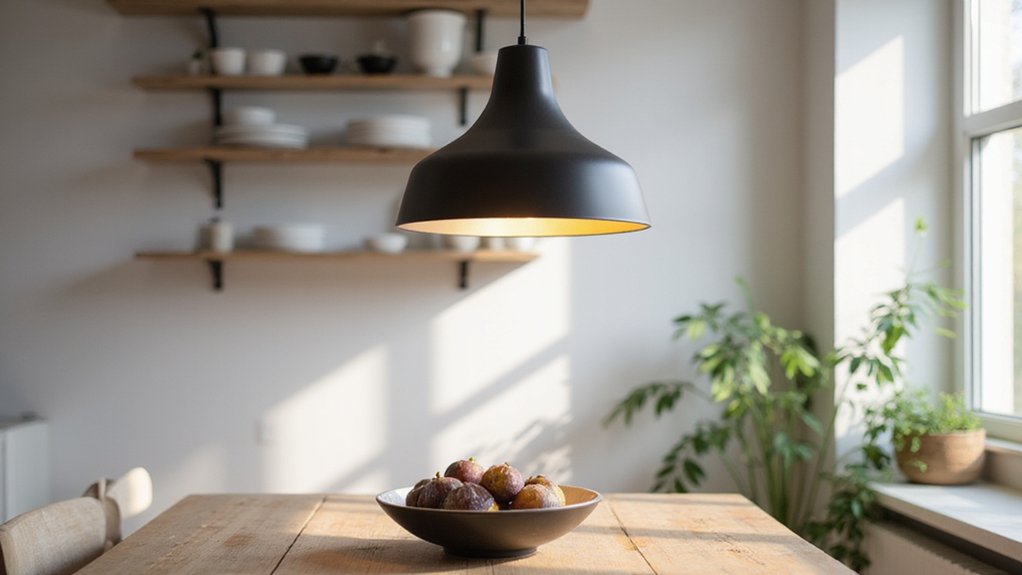
They hang individually from the ceiling, usually with a shade around one bulb to give focused light and reduce glare.
Whether you want a small accent or a large statement piece, understanding your options will help you choose the perfect fit.
Keep reading to learn all about pendant lighting and how to get it just right.
What Exactly Is a Pendant Light?
A pendant light is a ceiling-mounted fixture that hangs down by a cord, chain, or rod. It typically features a single bulb enclosed in a shade to minimize glare and add visual interest. Pendant lights are versatile, used over kitchen islands, dining tables, or as decorative accents to create focused task lighting. Their sizes vary from under 10 inches to more than 45 inches across, and they can be made from materials like glass, metal, or concrete. Whether you prefer a sleek, minimalist look or a sculptural statement, pendant lights can serve as focal points or be grouped together for layered lighting effects. They effectively combine functional illumination with stylish design. When deciding between a vanity and a desk, the style and function of the pendant light can help define the space. However, if the bulb is not compatible with the dimmer switch, it may cause LED bulb flickering, which often requires checking the driver or replacing the switch. These fixtures are also known as drop lights in the industry. To keep your home organized while choosing fixtures, a closet organizer can help store extra bulbs and tools neatly.
How Do Pendant Lights Differ From Chandeliers?
Pendant lights and chandeliers differ primarily in size and design. Pendant lights are typically small, measuring around 6 to 12 inches in diameter, and hang as a single fixture. They provide focused, task lighting suited for specific spots like above a kitchen island or dining table. Their compact, minimal design can evoke vintage styles or industrial charm without dominating the space. For buyers prioritizing quality and performance, single-fixture pendant lights offer more concentrated illumination compared to the broader ambient glow of a chandelier.
Chandeliers, on the other hand, are much larger, often spanning 24 inches or more across. They feature multiple arms or branches with several bulbs, creating a more elaborate decorative centerpiece. Because of their size and intricate materials such as crystals or wrought iron, chandeliers tend to be more expensive and complex to install. They also require more maintenance, as cleaning involves reaching into numerous small parts.
Choosing between the two depends on your lighting needs and room size. Use a pendant light for concentrated illumination in a specific zone, while a chandelier works best as a statement piece that illuminates a broad area with softer, ambient light.
The Main Types of Pendant Lights: Mini, Drum, and Geometric
Mini pendants, typically under 6 inches wide, deliver focused task lighting when grouped above a kitchen island or workspace. Their small size makes fixture maintenance simple because you can easily clean their glass or metal surfaces without much effort. These pendants are great for creating a sense of intimacy and highlighting specific areas, especially in compact spaces. For a safe installation, follow a step-by-step guide on wiring the fixture to your ceiling junction box. For optimal energy savings, consider using LED bulbs in your mini pendant fixtures. To minimize the risk of cord tangling, ensure the pendant’s cord is properly managed using adjustable cord locks similar to those found on cordless blinds.

[Adjustable 3cct Pendant Lights]: Pendant Light Fixtures color temperature can be adjusted 3000K 4000K, and 6000K.You can also use the control button to quickly switch the light color (cool white light, neutral light, and warm white light).

Best Places to Use Pendant Lights in Your Home
Use pendant lights strategically to maximize their impact in each space. Over a kitchen island, hang fixtures 30 to 36 inches above the counter surface, spacing them 24 to 30 inches apart to provide even task lighting without crowding. When lighting a dining table, suspend pendants 24 to 36 inches above the surface, and choose fixtures that are half to two-thirds the width of the table to create balanced visual proportions. For hallways, maintain a clearance of at least 7 feet from the floor and position fixtures every 8 to 10 feet to ensure consistent illumination without crowding the space. In bathrooms, mount vanity pendants at eye level, roughly 60 to 65 inches from the floor, to avoid shadows and achieve optimal task lighting. In bedrooms, use pendants as decorative accents by hanging bedside fixtures 18 to 24 inches above nightstands, adding both function and style. Always opt for LED bulbs for energy efficiency and check that there is enough clearance to prevent head bumps. For similar decorative versatility, consider choosing string lights that offer flexible placement for accent lighting in any room. For a more adaptable solution, consider applying window privacy film to pendant light shades to soften glare and diffuse light evenly. For a fun DIY twist, you can create your own homemade lava lamp as a unique decorative accent that adds a retro glow to any room.
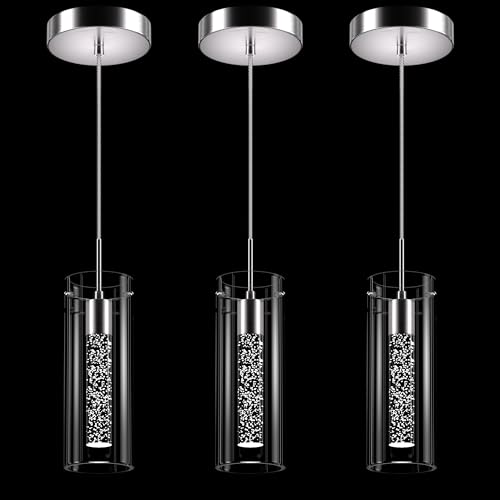
Modern Crystal Design: 3 Pack brushed nickel pendant lights for kitchen island lighting. Clear cylinder glass shades frame crystal bubbles that resemble champagne bubbles frozen in ice, adding sparkle above counters and dining tables

5CCT Pendant Light:5-Color LED indoor ceiling can switch between 2700K(Soft White),3000K(Warm White),3500K(Neutral White),4000K(Cool White),5000K(Daylight),You Can Feel free to Switch The Desired Lighting Effect According to Different needs.

Perfect Design:This 2 packs black pendant lighting for kitchen island combines both vintage and industrial styles. This pendant light fixtures are perfect for front warehouses, hallways, dining rooms, kitchen islands, worktops, stairwells, restaurants, etc
How Pendant Lights Deliver Both Task and Ambient Lighting
Pendant lights can effectively provide both task and ambient lighting through strategic design and placement. For task lighting, you want a narrow beam angle of about 30 to 45 degrees. This focused beam directs light downward onto specific areas, like a kitchen island or workspace, ensuring minimal shadows and reducing eye strain. The downward orientation helps deliver glare-free illumination right where you need it most. Unlike a traditional armoire with drawers, a pendant light’s design is dedicated solely to illumination rather than storage. To achieve ambient lighting, the fixture’s output is reflected off ceilings and walls to create a soft, diffuse glow that fills the room. Choosing a warm color temperature between 2700 and 3000 Kelvin enhances this cozy, inviting atmosphere. Dimmable pendant lights give you the flexibility to switch from a bright, task-oriented setting to a softer, more relaxed ambiance, eliminating the need for separate lighting fixtures. For those seeking multi-functional furniture, a top bed bench with storage offers a practical alternative that combines seating and organization. For a quick refresh, use a microfiber cloth to gently dust the fabric shade.
How to Choose the Right Pendant Light Size and Height
To choose the right size and height for your pendant lights, start with a simple calculation: add your room’s length and width in feet. The total becomes the ideal pendant diameter in inches. For example, if your room is 12 feet by 14 feet, a pendant with about a 26-inch diameter works well. When installing over islands, select a pendant roughly one-third of the island’s length, ensuring at least six inches of clearance from each edge to avoid crowding. Pendant size categories include mini, medium, and large to help you match the fixture to your space.
Hang pendants 30 to 36 inches above dining tables or counters for optimal light distribution and visual balance. If your ceiling height exceeds eight feet, add about three inches of drop for each additional foot of height. Proper placement ensures effective lighting without blocking sightlines. When installing multiple pendants, space them 24 to 36 inches apart to create a harmonious and symmetrical look. Remember, adjusting size and height allows you to customize your lighting to suit both the function and style of your space.
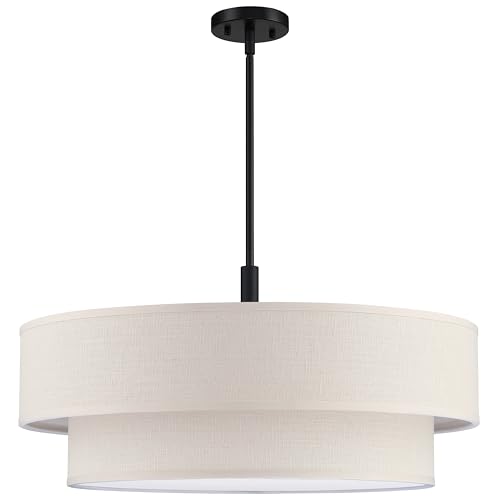
1. It is recommended to use light bulbs (please refer to the recommended light bulbs in the picture on the left). Bulb not included. Fully dimmable, requires additional purchase of dimmer switch and dimmer light.

High-Quality Materials for Lasting Wear : Crafted with solid 925 sterling silver cross pendant and hypoallergenic 316L stainless steel chain, this necklace is nickel-free, lead-free, and safe for sensitive skin.This mens necklace will effortlessly elevate your casual or polished outfits with simple yet stylish design

1. It is recommended to use light bulbs (please refer to the recommended light bulbs in the picture on the left). Bulb not included. Fully dimmable, requires additional purchase of dimmer switch and dimmer light.
Common Pendant Light Materials and Styles
Pendant lights come in a variety of materials and styles, each offering different effects and functionalities. Glass shades are popular because clear glass diffuses light evenly, making them ideal for task areas like kitchens or workspaces. Frosted or colored glass options create a softer, mood-enhancing ambiance, perfect for living rooms or dining areas. Metal shades such as brass, copper, or steel are highly durable and direct light downward, making them excellent for precise lighting control in task zones. Fabric shades like linen or bamboo soften the light further, adding warmth and coziness to a space. Plastic or acrylic shades provide a lightweight, budget-friendly alternative; they are durable but require regular dusting to keep them looking their best. Natural fibers like rattan lend an earthy, textured look that pairs well with rustic or bohemian styles. For a more cost-effective approach, some homeowners also consider single and double cell shades for windows, though these differ from pendant light materials. Similarly, paying attention to the step-by-step instructions for hanging bay window curtains can help develop a methodical approach to installing pendant lights.
Regarding styles, pendant shapes vary widely—globes, bells, drums, and linear designs—all influence how the light is dispersed and the overall aesthetic. For energy efficiency, pairing any material with LED bulbs is recommended to reduce power consumption and minimize heat output. Additionally, if you have glass pendant shades, applying a window film can provide a DIY method to modify light diffusion or add decorative patterns. Selecting the right pendant involves balancing your desired function, the look you want, and ease of maintenance.
How Much Do Pendant Lights Cost to Buy and Install?
Professional installation typically costs between $150 and $400 per fixture, though simple replacements can fall between $80 and $250. If your project involves new wiring or ceiling reinforcement, expect to pay an additional $200 to $500. Overall, the total cost for installing a pendant light usually ranges from $100 to $300 for standard jobs. However, more complex projects that require extensive electrical work or structural changes can reach up to $6,500. Planning your space and budget around these figures will help you get a clear idea of potential expenses. For a simpler alternative, DIY shoe organizers can be built affordably using common materials and basic tools. Stackable storage baskets offer another low-cost organizing solution for small spaces. For those transporting gear, learning to secure a canoe with proper roof rack straps prevents both damage and accidents.

【Vintage Style】 The industrial pendant light kit combines modern and vintage styles with a retro design. The pendant light socket makes it a perfect decoration for the living room, bedroom, dining room, kitchen, office, porch, warehouse, barn, hallway, bar, stairway, kitchen, corridor etc.

【Pendant Canopy Kit】 Included 1pcs gold 4.7" diameter, 1" deep canopy kit, 0.28"D&0.79"H thread pipe, 1pcs US standard universal crossbar, 1pcs UL ground wire and other mounting necessary hardware.

Wide application:This classic pendant light canopy kit with simple and fine craftsmanship can be used as chandelier hooks, decorative pendants, with different styles of chandeliers, suitable for the assembly of wall lights, vintage lights, ceiling lights, European lights, Chinese lights, DIY lighting fixtures, etc.
Quick Tips for Installing a Pendant Light Yourself
Before you begin installing a pendant light, turn off the circuit breaker at the main panel and verify no current is flowing using a non-contact voltage tester—don’t just switch off the light. Wear protective gloves for safety, and inspect the junction box to ensure it is securely attached and can support the weight of the fixture. Attach the mounting bracket tightly to the junction box. Connect the wires in the proper order: attach the ground wire first, then the neutral wire, and finally the hot wire. Secure each connection with wire nuts and give them a gentle tug to confirm they’re snug. Before attaching the canopy, adjust the length of the pendant drop to your desired height. Measure and cut the pendant cable to your desired drop length, ensuring adequate slack for a clean connection. Use an LED bulb for energy efficiency and longer lifespan. Keep track of screws, nuts, and mounting parts to avoid losses during installation. Once wired, restore power, turn on the switch, and check that the light functions correctly. If it doesn’t, troubleshoot by inspecting the breaker, verifying bulb connections, and ensuring all wires are correctly connected. Level the canopy and shade to make sure the pendant hangs straight and looks balanced. That’s how you install a pendant light yourself safely and effectively.
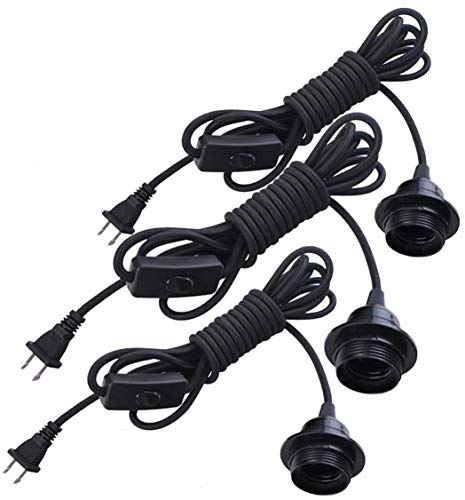
Lamp kits fit bulbs with standard E26/E27 medium size bases.
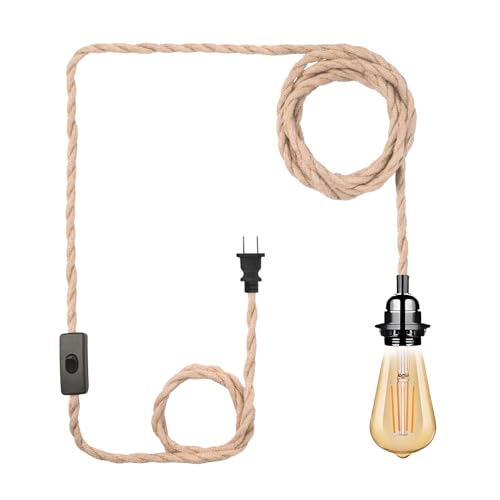
[Plug in Pendant Light Cord] - 15FT Plug in hanging light kit with E26/E27 socket, compatible with all types of E26/E27 bulb (NOT Included), Max 60W, 120V

Unique Style: Elegant white pendant light kit combines modern and industrial styles with a vintage design. Pure white is simple and comfortable, enhancing your home decor. Perfect for compatible with different lampshades, DIY your own pendant light fixtures