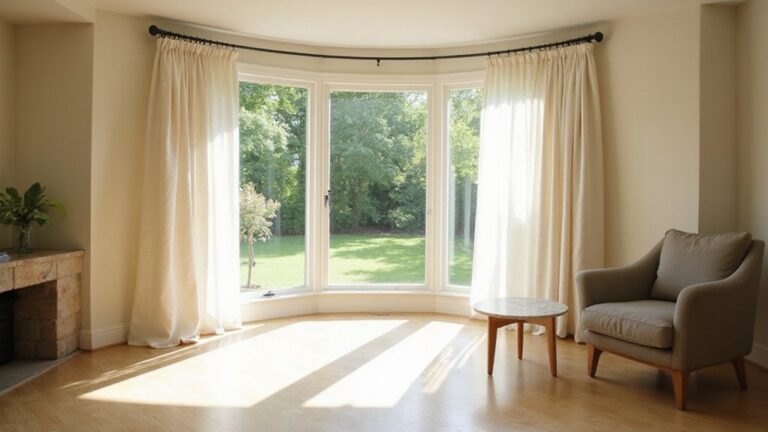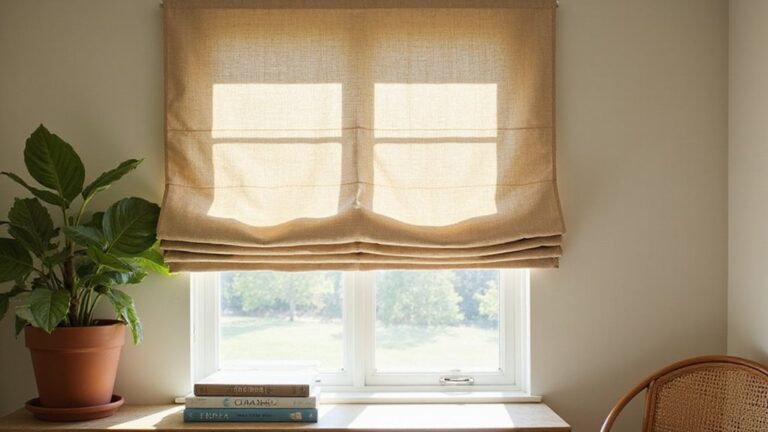
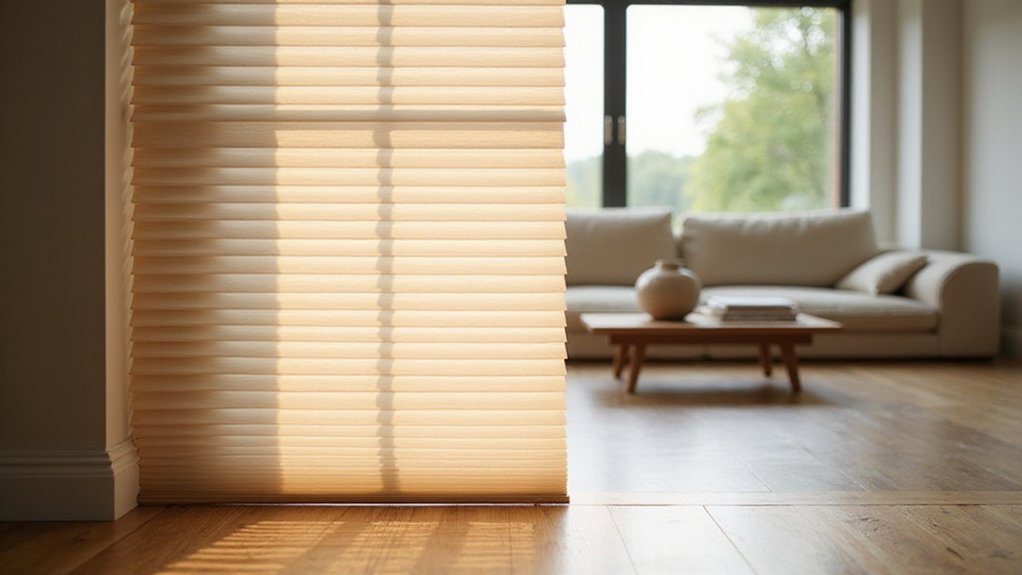
Deciding between blinds and curtains can feel tricky since each offers different benefits. Blinds give you precise control over light and are easy to clean, making them great for humid spaces like kitchens.
Curtains, on the other hand, provide better insulation and noise reduction, especially for larger windows. Your choice depends on balancing maintenance, style, and energy needs, and the details below will help you make the best call.
What’s the Main Difference Between Blinds and Curtains?
Blinds and curtains differ primarily in their structure and function. Blinds consist of rigid materials like wood, metal, or plastic with adjustable slats that you can tilt to control light and privacy. Curtains are soft fabric panels that hang freely along a rod, offering a flowing, flexible look. Blinds operate with cords or wands to tilt or lift the slats, providing precise light control; curtains are simply drawn open or closed. Blinds are typically made from hard materials like aluminum, plastic, or wood, which contribute to their durability. For those interested in DIY installation, connecting LED strip lights requires similar basic tools like a screwdriver and measuring tape to ensure a clean, secure setup. For a similar DIY project, you can build a hat rack using basic tools and budget-friendly materials. For a more hands-on approach, you could also construct your own DIY clothing rack to save money and customize storage.
These structural differences influence their benefits: blinds are more resistant to moisture, making them ideal for kitchens and bathrooms, and generally last longer with less maintenance. Curtains, on the other hand, excel at insulating rooms thanks to heavier fabrics that can effectively block heat and sound. They also come in a vast array of colors, fabrics, and textures, giving you greater scope for decorating and adding warmth to your space. Your choice between the two depends on whether you prioritize durability and minimalism or aesthetics and insulation.
Which Option Gives You Better Light Control and Privacy?
Blinds offer better light control and privacy compared to blackout curtains. You can tilt the slats to direct light precisely where you want, reducing glare while still enjoying your view. Adjusting the angle allows you to balance natural light and privacy without fully blocking out the light. For daytime privacy, you can tilt the blinds upward without losing sunlight. This flexibility makes blinds ideal for spaces like living rooms or home offices where managing light is important. In contrast, blackout curtains provide complete darkness and more effective privacy at night, especially in bedrooms. They block light more thoroughly, minimizing leaks around the edges. Additionally, quality curtains often add decorative appeal and are more durable, especially when layered with other fabrics. For rooms with limited natural light, blinds allow you to control privacy and daylight efficiently, something curtains cannot do without being fully drawn. For even more control, you can use curtain rings to layer sheers and decorative drapes over blinds for added style and light management. If you are also tackling other home updates, remember that replacing a ceiling light is another straightforward project that can improve your room’s ambiance. For nighttime use, consider a night light to provide gentle illumination without disturbing your sleep.

28"W x 59"H PECAN WOOD BLINDS — This pecan basswood blind is ordered as 28"W x 59"H and measures 27.5"W x 59"H when finished. The actual blind is 0.5 inch narrower than the selected order width; confirm the window opening before purchase.

Room Darkening Cordless Vinyl Blinds: Reduce heat and help save on the electric bill while filtering out light with the Achim Home Decor CO GII Deluxe Sundown Cordless Room Darkening Mini Blinds. Engineered for privacy, these PVC blinds with no cords to get tangled are child and pet safe.

23"W x 64"H BLACK WOOD BLINDS — This black basswood blind is ordered as 23"W x 64"H and measures 22.5"W x 64"H when finished. The actual blind is 0.5 inch narrower than the selected order width; confirm the window opening before purchase.
Blinds vs Curtains: Which One Actually Lowers Your Energy Bills?
Blinds generally provide better energy savings during the summer months, especially if they are reflective or made of materials designed to bounce heat away. They can reduce indoor heat gain by up to 45 percent, making them highly effective in lowering cooling costs. However, their slatted design can allow heat to escape in winter, which diminishes their insulation benefit during colder months. On the other hand, thick, thermal curtains made from dense fabrics like wool or velvet trap air and significantly reduce heat loss, especially when sealed tightly or topped with a pelmet. For optimal performance, the curtain rod should be installed above the window to allow full coverage and prevent air gaps. For those seeking the sturdiest support for heavy thermal drapes, top clothes hangers can even be repurposed as temporary curtain rod hooks in a pinch. For a more integrated ceiling solution, recessed lighting can be installed within a drop ceiling to avoid interfering with window treatments.
Cellular shades, which feature a honeycomb-like structure, offer year-round efficiency by reducing heat transfer through the window by about 40 percent. Layering curtains over blinds can provide a versatile, season-proof approach that maximizes savings in both summer and winter. Material quality directly impacts performance; reflective curtains and fabrics with high thermal resistance are better for insulation and heat control. Combining these treatments strategically helps create a balanced solution tailored to your home’s seasonal needs.

Pair Sold: Each package includes 2 panels of blackout curtains. Each panel measures 40"W x 63"L, with a pair measuring 80"W x 63"L. Each panel has 6 anti-rust silver grommets(1.6 inch inner diameter) which would fit most standard curtain rods

Sold as 2 Panels: Each package contains 2 pieces black privacy curtains, each panel measures 40" in width and 72" in length, the curtain sets two panels cover a total 80 inch width. The window curtains feature a top dual rod pocket design and have 2 hanging options (rod pocket and clip rings), crafted with a 3" rod pocket to fit a curtain rod no wider than 1.5" for effortless installation

Pair Sold: Each package includes 2 panels of short blackout curtains. Each panel measures 40"W x 63"L, with a pair measuring 80"W x 63"L. The curtains blackout have 2 hanging options (Rod pocket & Clip Style) with a 3-inch rod pocket to fit standard or decorative curtain rods. Don't worry if this blackout curtain is a few inches shorter than your window. Hang with rings & hooks for easy 3-4" height adjustment.
Blinds vs Curtains: Which Is Easier to Clean and Maintain?
Blinds are much easier to clean and maintain than curtains. You’ll spend about 5 minutes per window weekly dusting their hard, smooth surfaces with a microfiber cloth. In contrast, curtains require at least 10 minutes of weekly shaking and vacuuming. They also need periodic washing or dry cleaning every 6 to 12 months, which can be costly, especially for delicate fabrics that demand professional care. If you find yourself with an old set of blinds to replace, remember that Goodwill does not typically accept hangers or large home goods like window coverings, so check local donation guidelines before dropping them off. Cleaning stains on blinds is straightforward—simply use a vinegar-water mix. Their moisture resistance makes them suitable for kitchens and bathrooms, where curtains could mold due to humidity. Mounting blinds is simple with their hardware, allowing quick spot cleaning without removing them. For deeper care, you can also use a step-by-step guide to wipe down each slat individually. Curtains, however, often require taking down rods for deep cleaning, which takes time and effort. Blinds tend to last between 7 and 15 years with minimal upkeep, saving you both time and money in the long run. When choosing between the two, consider the overall style of your room, as the sleek look of blinds can complement modern spaces while curtains add a softer, more traditional feel.

IMPORTANT! - This blind is 34.5" wide to allow for mounting the blind inside a 35" wide window. Your blind will arrive to you exactly 34.5" wide. Our 2 Inch Faux Wood blinds are designed for a wide variety of window sizes and styles. Sizes stated within the product descriptions are listed by WIDTH then HEIGHT. See measuring instructions to ensure best fit.

Inside Mount ONLY. For better internal installation, a standard 3/8 inch deduction is made to the width for a proper INSIDE MOUNT fit. The actual blind size is 21 5/8" W x 36" H, perfect for window 22" W x 36" H. The unique spring rod can extend 1 inch in total, allow the blind to fit for window size W21.7-22.6 X H36".

Thoughtful Matching Cleaning Tools: 2 pieces of 7 fingers dust cleaner to remove large areas of dust efficiently and quickly,2 pieces mini vent cleaner does not miss the opportunity to clean any corner,double-headed design,suitable for blind angle and small products,you can choose to use according to your needs
How Window Width Determines Whether You Need Blinds or Curtains
If your window width is under 70 inches, blinds are the best choice. They offer precise light control and are typically more cost-effective for narrow spaces. Plus, their material durability makes them ideal for areas with high humidity, like bathrooms. For windows between 70 and 100 inches, your decision should hinge on style preference. Curtains add atmosphere and thermal benefits, while blinds provide better light accuracy. For vaulted ceilings, can light fixtures can be integrated to evenly illuminate the space without obstructing the window treatment. Once your window exceeds 100 inches, drapery tends to be the most suitable option, offering a tailored appearance and superior insulation. Keep in mind that curtains need extra width for mounting, and blinds require careful outside-mount measurements to ensure proper fit. Measure your window width first to guide whether durability or style takes priority. For a creative weekend project, you might explore a DIY lava lamp for additional ambiance and personalized decor. For particularly wide windows, layered curtains with linings can provide additional insulation and noise reduction benefits.
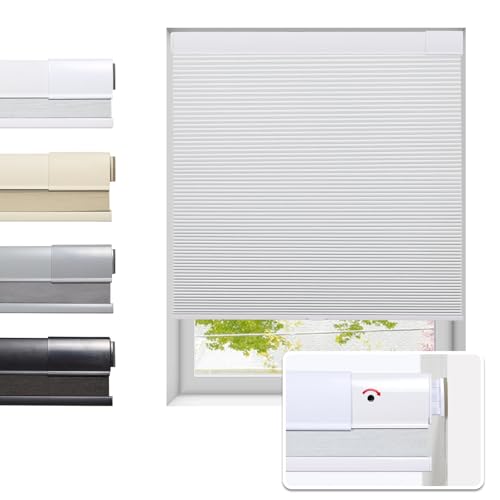
How to Choose Your Size: Measure your window's exact width. If your measurement exactly matches one of our sizes (e.g., 30" or 30 1/2"), choose that precise size. If your measurement falls between two sizes, always round DOWN to the nearest smaller size. For example: 30 7/8" wide → choose 30 1/2", 30 1/8" wide → choose 30"

【Excellent Natural Woven Fabric】100% excellent polyester imported; Bamboo-look fabric gives your room an easy-breezy, carefree look and feel in just minutes; Prized for their unique differences in colors, these ahhh-inspiring woven window coverings easily blend into almost any room or with any style; Unlined, cast a soft, inviting glow over living rooms, home offices and more while naturally shading your interiors from harsh sunlight.
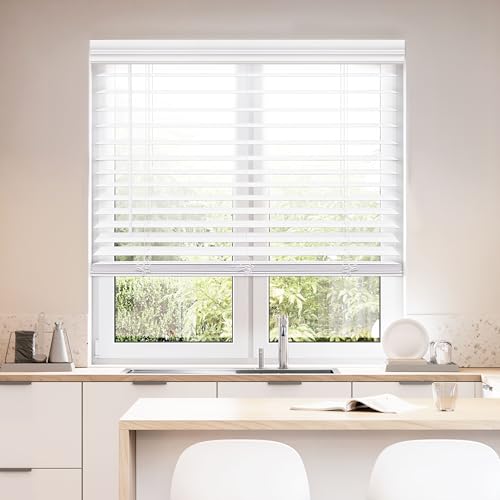
All blinds are manufactured with a standard 1/2" width deduction to allow for proper installation clearance. The actual blind width will always be 1/2" narrower than the selected size, regardless of whether you choose an inside or outside mount.
Best Window Treatment for Kitchens, Bathrooms, and Bedrooms
Moisture resistance is crucial for kitchen window treatments. Faux wood blinds or vinyl roller shades are ideal because they wipe clean easily and resist warping from steam and grease. These materials handle high humidity and splashes well, maintaining their appearance over time. Avoid fabric options that can absorb moisture, leading to damage and mold growth. For easy maintenance, choose treatments that can be cleaned with a damp cloth or gentle cleaning solutions, keeping your kitchen looking fresh and functional. Woven shades like wood or bamboo are a suitable low-maintenance option that adds texture to the kitchen.
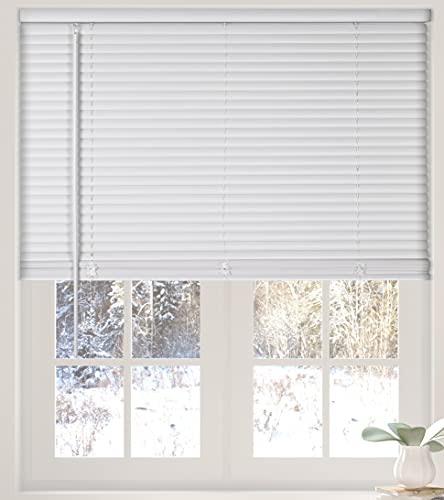
Important: This blind is 30.5" wide. For inside mounts, your window frame should be 30.75" – 31.5" wide for the best fit. Wider windows will have larger light gaps; narrower ones may not fit. Check product images for detailed measuring instructions and size options. Ideal blinds for indoor windows, these cordless mini blinds combine functionality with style. Refer to product images for measuring and size details. Proper sizing enhances the performance and appearance of these horizontal window blinds in your kitchen, bathroom, or living room.

Smooth Wood-Look Slats (No Grain Texture) - 2" composite faux-wood slats with a clean white finish that complements modern, transitional, classic or minimalist décor. Smooth, low-maintenance surface with no wood-grain texture.
Important: This blind is 34" wide. For inside mounts, your window frame should be 34.25" – 35" wide for the best fit. Wider windows will have larger light gaps; narrower ones may not fit. Check product images for detailed measuring instructions and size options. Ideal blinds for indoor windows, these cordless mini blinds combine functionality with style. Refer to product images for measuring and size details. Proper sizing enhances the performance and appearance of these horizontal window blinds in your kitchen, bathroom, or living room.
Which One Gives You More Value for Your Budget?
Blinds generally give you more value for your budget. They start at a lower upfront cost—basic vinyl options can be as inexpensive as $8 per window—compared to curtains, which begin around $63 for a standard 24-inch by 36-inch window. Over the long term, blinds tend to be more cost-effective because they are more durable and require less maintenance; they resist moisture better and only need occasional wiping, while curtains may need replacing within about 10 years. Blinds come in a variety of materials like vinyl, aluminum, and wood, each priced to fit different budgets. For blackout needs, blinds offer solid light control through slatted or cellular designs, though thick curtains can block more light and reduce heat loss by about 10 percent during winter. However, if you notice any flickering from a nearby light source, that problem is often caused by incompatible dimmer switches rather than the window covering itself. Additionally, a salt lamp’s soft amber glow can create a calming atmosphere that complements any window treatment. Installation costs also favor blinds, with prices for eight windows ranging from $280 to $800, while curtains may cost between $440 and $3,200. Overall, if you are focused on getting the most value for your money, blinds are the more economical choice. If you are considering a similar budget-friendly project, building a DIY bed end bench can be a great way to save money while adding functional storage to your home.